Finding cheap hotels in expensive U.S. cities usually comes down to one smart choice: do not treat downtown as the default. In many major cities, a better-value stay is often in a neighborhood outside the center with solid transit, lower room rates, and cheaper food nearby. The goal is not just to book a lower rate. It is to lower your total trip cost.
Why Hotel Prices Climb So Fast in Major U.S. Cities
Hotel prices rise quickly in major U.S. cities because the most in-demand areas have the most pressure on rates. Downtown districts sit close to offices, tourist attractions, convention centers, shopping areas, and nightlife. That means business travelers, vacationers, and event crowds often compete for the same rooms.

The nightly rate is only part of the cost. City taxes can be high. Parking can add a large daily charge. Some hotels also add destination fees or other mandatory extras that push the final total much higher than the advertised price.
Rates also move fast. A room that looks reasonable one week can become expensive the next because of a convention, holiday weekend, concert, sports event, or school break.
That is why the cheapest-looking central hotel is not always the best deal. In expensive cities, a prime location often brings premium pricing and extra charges.
How to Choose Budget-Friendly Neighborhoods
A practical way to save money is to look at neighborhoods, not just hotel listings. The best-value areas are often outside the tourist center but still easy to reach by subway, train, or bus.
A budget-friendly neighborhood usually offers three things: lower room prices, good transit access, and affordable daily essentials. That last part matters more than many travelers expect. If the area has grocery stores, takeout spots, pharmacies, and simple cafes, your daily spending often drops.
When comparing neighborhoods, ask:
- How long does it take to reach the places you actually plan to visit?
- Is there a subway, train, or major bus stop nearby?
- Are there affordable food options within walking distance?
- Will you end up using rideshare because transit is weak?
- Does the area match your trip style and schedule?
For example, a neighborhood 20 minutes from downtown on a direct train line may offer far better value than a central hotel surrounded by higher food prices and higher room rates.
This is also where city-specific content can support the reader naturally. Travelers planning a specific trip may also want guides like budget travel in New York City, budget travel in Boston, and budget travel in Washington, DC.
Why Staying Near Transit Matters More Than Staying Downtown
In expensive cities, convenience is often about transportation, not address prestige. Many travelers save more by staying near a reliable transit stop than by paying extra to stay in the center.
A hotel outside downtown can work very well if it gives you a simple ride to the places on your itinerary. In many cases, the savings from the room rate matter more than cutting 10 or 15 minutes from the trip.
This is why cheap hotels near city transit often offer stronger overall value than central hotels. You may pay less for the room, find cheaper food nearby, and still get to the main sights without much trouble.
A simple comparison helps:
A downtown hotel may cost more each night and let you walk to a few attractions.
A hotel outside downtown may cost less, sit near a subway or rail line, and get you to those same attractions in 20 to 30 minutes.
For many budget-conscious travelers, the second option wins.
Before booking near transit, check a few practical details:
- The walking distance from the hotel to the station
- whether the route is direct or full of transfers
- How often do the trains or buses run
- whether the service stays reliable at night and on weekends
- Whether airport access is easy from that area
Also Read: public transportation in expensive U.S. cities.
Hotel vs Hostel vs Apartment: Which Option Fits Your Trip
The best low-cost stay depends on who is traveling and what kind of trip you are planning. A lower nightly rate does not always mean better value.
Hotels
Hotels are often the easiest option for first-time visitors, couples, and short stays. They are usually simpler to compare, easier to book, and more predictable if your plans change.
The tradeoff is that hotels in expensive cities can come with extra costs. Breakfast may not be included. Parking may cost more than expected. Fees can push the final price up quickly.
Hostels
Hostels can work well for solo travelers or travelers who care more about location than privacy. In some major cities, they are one of the cheapest ways to stay in a central or transit-friendly area.
Still, not every traveler will like the tradeoffs. Shared rooms, noise, fewer private amenities, and limited storage can make the cheapest option feel less practical. Private hostel rooms can also get closer to hotel pricing than many people expect.
Apartments
Apartments can make sense for families, small groups, or longer stays. A kitchen, more space, and lower per-person cost can make them attractive.
But they are not automatically cheaper. Cleaning fees can be high. Check-in can be less flexible. Some apartment rentals are also in areas with weaker transit, which can raise daily transport costs.
A smarter option is to choose the type of stay that fits your trip pattern, not just the one with the lowest base rate.
How to Compare Total Stay Cost, Not Just Room Price
One of the biggest mistakes travelers make is comparing hotels by nightly price alone.
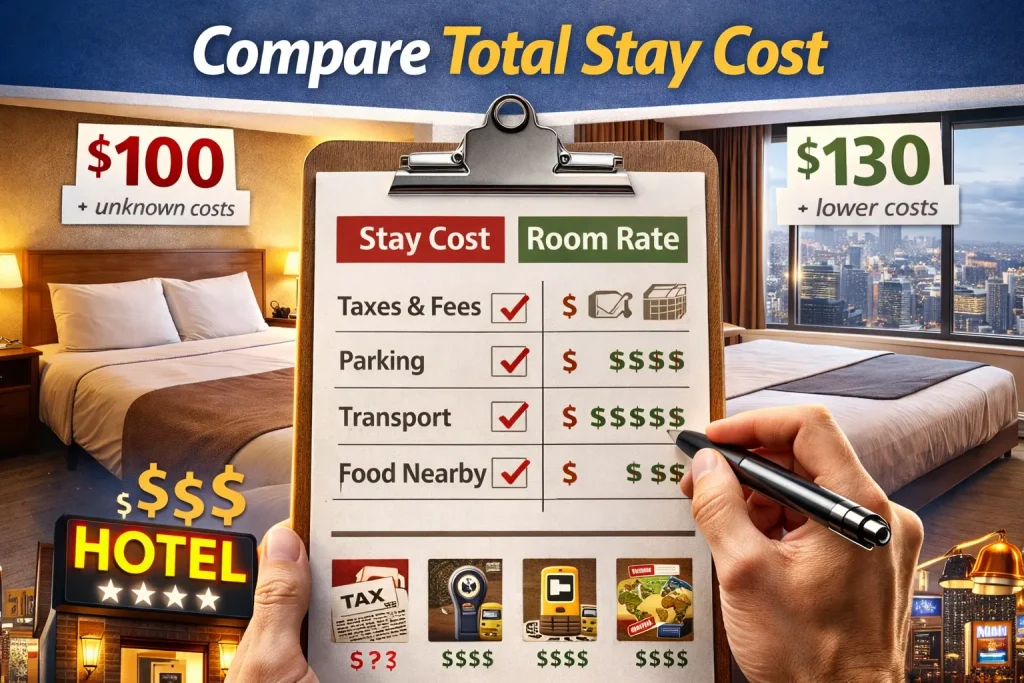
A lower room rate can be misleading if the property adds fees, sits far from transit, or leaves you surrounded by expensive food options. A slightly higher rate can sometimes save money overall if it lowers commuting, dining, and extra charges.
To compare value properly, look at the full cost of the stay:
- room total for all nights
- taxes and mandatory fees
- parking charges if you have a car
- breakfast or kitchen access
- public transit or rideshare costs
- food prices around the hotel
- any baggage storage or early check-in fees
For example, a hotel that looks cheap on the booking page may stop being cheap if you need multiple rideshare trips every day. On the other hand, a property near a subway line and affordable food options may lower your total spending even if the room is not the lowest-priced one in the search results.
That is the real logic behind how to save money on accommodation in expensive cities. The right hotel is the one that keeps your overall trip cost down.
Booking Strategies That Help You Avoid High Hotel Rates
Many travelers reduce costs by changing how they book, not just where they stay.
One practical strategy is to search for flexible dates. In major cities, hotel prices can shift sharply depending on weekday business demand, weekend tourism, holidays, and local events. Moving your stay by even one or two nights can sometimes make a clear difference.
Another smart move is to compare the same hotel across several booking paths. Sometimes a booking platform shows the best rate. In other cases, the hotel’s own site offers better cancellation terms or useful extras.
It also helps to check refundable rates before locking in a non-refundable room. A slightly higher flexible rate can be worth it if plans change or if you find a better price later.
Useful booking habits include:
- checking the final checkout price, not just the listed rate
- comparing multiple neighborhoods, not just one part of the city
- avoiding major event dates when possible
- reviewing parking, breakfast, and baggage rules
- using the map view to spot affordable hotels outside downtown near strong transit lines
A practical way to save money is to search by map first and price second. That makes it easier to find better-value locations instead of getting pulled toward overpriced central areas.
Common Mistakes Travelers Make When Choosing Accommodation
Budget travelers often lose money by focusing on the wrong detail.
One common mistake is paying extra for downtown without a real need. If your plans take you across the city anyway, a central hotel may not save much time.
Another mistake is booking the lowest rate without checking the area around it. A cheap room in a poorly connected location can lead to more transport costs, fewer food choices, and more hassle every day.
Many travelers also ignore the fee structure. Taxes, parking, cleaning charges, destination fees, and late checkout costs can raise the final total more than expected.
Apartments create another common trap. They can be a good value, but not always. High cleaning fees, awkward check-in rules, and weaker transit access can quickly reduce the savings.
It also helps to avoid judging value by brand name or polished photos alone. In expensive cities, the details that usually matter most are:
- transit access
- total checkout cost
- affordable food nearby
- convenience for your actual itinerary
- flexibility if plans change
Best Takeaways for Finding Cheap Hotels in Expensive Cities
The best way to find cheap hotels in expensive U.S. cities is to stop treating downtown as the only convenient option. In many cases, a better choice is a hotel outside the center that sits near reliable transit and everyday food options.
Finding affordable accommodation is one of the biggest challenges in expensive destinations. For more ways to control your total trip budget, explore our complete guide to budget travel tips for expensive cities in the USA.
A practical approach is to compare neighborhoods first, then compare properties within them. Look at the full cost of the stay, not just the room rate. Think about transit, food, fees, and convenience together.
For many travelers, the best strategy is simple:
- Stay outside the highest-priced core
- Stay near strong public transit
- Compare total cost, not just headline rate
- Choose the accommodation type that fits your trip
- Avoid paying extra for a location you do not really need
That is usually what separates a smart booking from an expensive one.
FAQ
Where can you stay on a budget in major U.S. cities?
A practical choice is to stay outside the main downtown core in neighborhoods with good transit access. These areas often offer lower hotel prices and more affordable food while still keeping the city easy to explore.
Are cheap hotels near city transit better than staying downtown?
Often, yes. Cheap hotels near city transit can offer better overall value because they lower room costs without making sightseeing difficult. The best options are close to direct, reliable transit lines.
Is it cheaper to stay outside downtown in expensive cities?
In many cases, yes. Hotels outside downtown often have lower nightly rates, and nearby food or parking may cost less, too. The key is choosing an area with strong transit access.
What is the cheapest type of accommodation in big U.S. cities?
That depends on the trip. Hostels are often cheapest for solo travelers. Hotels may work better for short, simple stays. Apartments can be cost-effective for groups or longer stays, but extra fees need close attention.
How do you compare hotel prices the right way?
Compare the full stay cost, not just the nightly rate. Check taxes, parking, cleaning fees, transport costs, nearby food prices, and any mandatory extras before booking.
Are apartments cheaper than hotels in expensive U.S. cities?
Sometimes, but not always. Apartments can lower costs for longer stays or groups, but cleaning fees, weaker transit access, and stricter check-in rules can reduce the value.
How far from downtown should budget travelers stay?
There is no single rule, but many travelers do well in neighborhoods about 20 to 30 minutes from downtown by direct transit. The right distance depends on your itinerary and transport options.
What fees should travelers check before booking a cheap hotel?
Look for taxes, parking fees, destination fees, cleaning charges, baggage storage fees, and any costs tied to early check-in or late checkout.

Silas Harlow
Silas Harlow is a travel writer and budget travel researcher at TravelBee Trips. He creates practical guides covering destinations, accommodation, transportation, attractions, safety, and affordable travel planning. His research uses official tourism resources, government websites, maps, and established service providers where available. Because travel information changes frequently, readers should verify important details before booking. View his complete author profile and editorial approach.
Pingback: Visiting NYC in February: Weather, Things to Do & Travel Tips
Pingback: Two Days in NYC: Best Itinerary & Night Activities