Expensive U.S. cities do not have to mean expensive sightseeing. Free things to do in expensive U.S. cities can easily fill a big part of your trip if you plan around parks, waterfronts, museums, public art, neighborhood walks, and local events instead of relying on paid attractions every day.
Free attractions are one of the best ways to reduce travel expenses in costly destinations. For a complete money-saving strategy, including accommodation and transportation tips, see our guide to budget travel tips for expensive cities in the USA.
That matters most in places where hotel costs, meals, and transport already take a big share of your budget. A practical way to save money is to build each day around free experiences first, then add one paid stop only if it offers something truly special.
Why Free Attractions Matter More in Expensive Cities
In high-cost cities, sightseeing expenses add up fast. One ticket may not seem too bad on its own, but several in one day can push your budget much higher than expected.
Free attractions solve more than just the money problem. They also make your itinerary easier to manage. You can move more slowly, spend longer in one area, and avoid running across the city just to justify the price of a ticket.
They also tend to show the city more naturally. A waterfront walk, a lively public square, a local market area, or a major park often gives travelers a better feel for a place than a crowded attraction with timed entry.
Free Museums, Galleries, and Cultural Sites That Lower Trip Costs
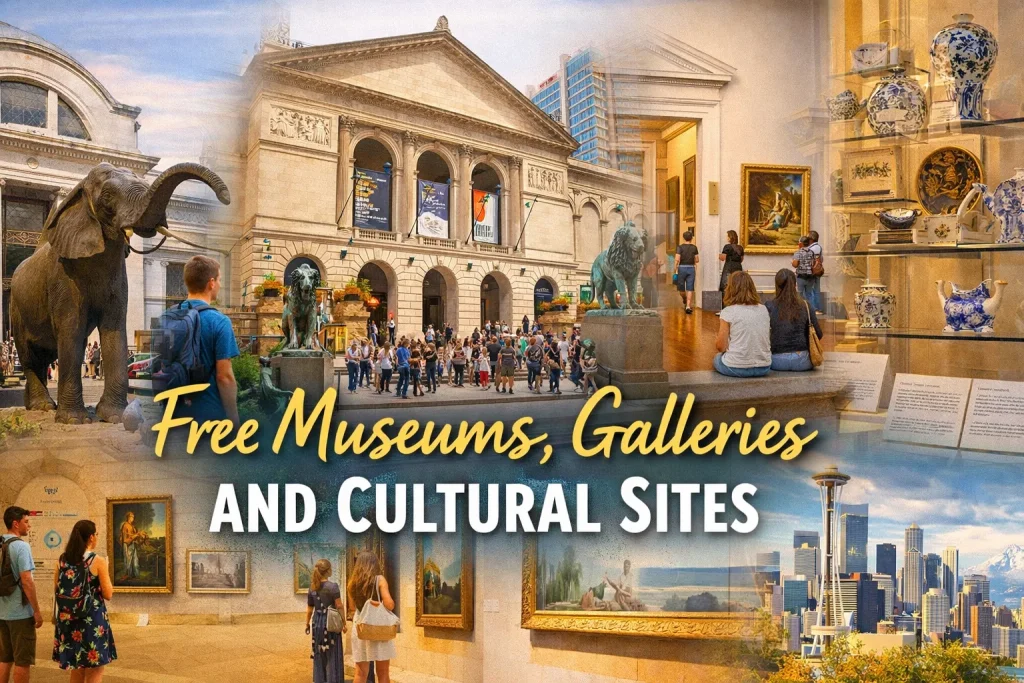
Museums are one of the best ways to cut sightseeing costs without making the trip feel limited. Washington, D.C., is the strongest example. The city’s official tourism site highlights the Smithsonian museums, the National Gallery of Art, monuments, memorials, and many annual events as free, which makes D.C. one of the easiest major cities for low-cost cultural sightseeing.
Other expensive cities are not as fully free as D.C., but they still offer useful options. New York City’s official tourism site maintains guides to budget-friendly attractions and museums that are always free or free at certain times. Chicago promotes free museums, the Chicago Cultural Center, and free admission days. San Francisco also highlights free attractions and free museum opportunities across the city.
Boston is another good example for budget-conscious travelers. Its official visitor site highlights free things to do across festivals, museums, exhibits, films, classes, and walking trails, which gives travelers several ways to add culture without adding much cost.
A smart approach is to check three things before your trip:
- museums that are always free
- free admission evenings or monthly free days
- cultural spaces like libraries, sculpture parks, memorials, and historic sites
That one habit can lower your sightseeing budget without making the day feel empty.
Parks, Waterfronts, and Scenic City Walks Worth Prioritizing
Outdoor public spaces are some of the best free attractions in expensive cities because they combine views, atmosphere, and flexibility. They also work well between meals, museum visits, and neighborhood stops.
New York City is packed with this kind of value. Official city resources recommend budget-friendly options such as Brooklyn Bridge Park, and the Staten Island Ferry remains a free way to enjoy harbor views and skyline scenery. The city also promotes the High Line and other public spaces as part of a budget-friendly visit.
San Francisco is especially strong for free outdoor sightseeing. SF Travel highlights free attractions across the city, including iconic public spaces and scenic stops, with Golden Gate Park and the Golden Gate Bridge standing out as natural priorities for travelers trying to keep costs down.
Chicago gives travelers a lot of value in a compact area. Choose Chicago highlights free attractions year-round, including Millennium Park, free museum days, and the Chicago Cultural Center, which helps visitors build a strong day without constant spending.
Boston and Seattle also work well for walkers. Meet Boston promotes major walking trails such as the Freedom Trail and Black Heritage Trail, while Visit Seattle highlights free or low-cost public-facing spots such as Olympic Sculpture Park and Seattle walking tours.
Local Events and Community Activities That Cost Little or Nothing
Free events are one of the easiest ways to make a trip feel full without increasing your budget. They also make expensive cities feel more local and less staged.
Official tourism boards in New York City, Washington, D.C., Boston, and Seattle all maintain current event calendars that include festivals, performances, neighborhood programming, and seasonal activities. These calendars are worth checking before your trip and again once you arrive, because event timing can change and new listings often appear close to the date.
Chicago is especially strong here. Choose Chicago regularly highlights free concerts, free museum opportunities, neighborhood events, and seasonal activities. Boston and Seattle do the same through their official event listings, which can help travelers replace an expensive evening plan with something that still feels memorable.
A practical way to save money is to treat free events as anchor activities, not last-minute extras. A concert in the park, a cultural program, or a seasonal waterfront event can become the main experience of the evening.
How to Build a Sightseeing Day Around Free Experiences
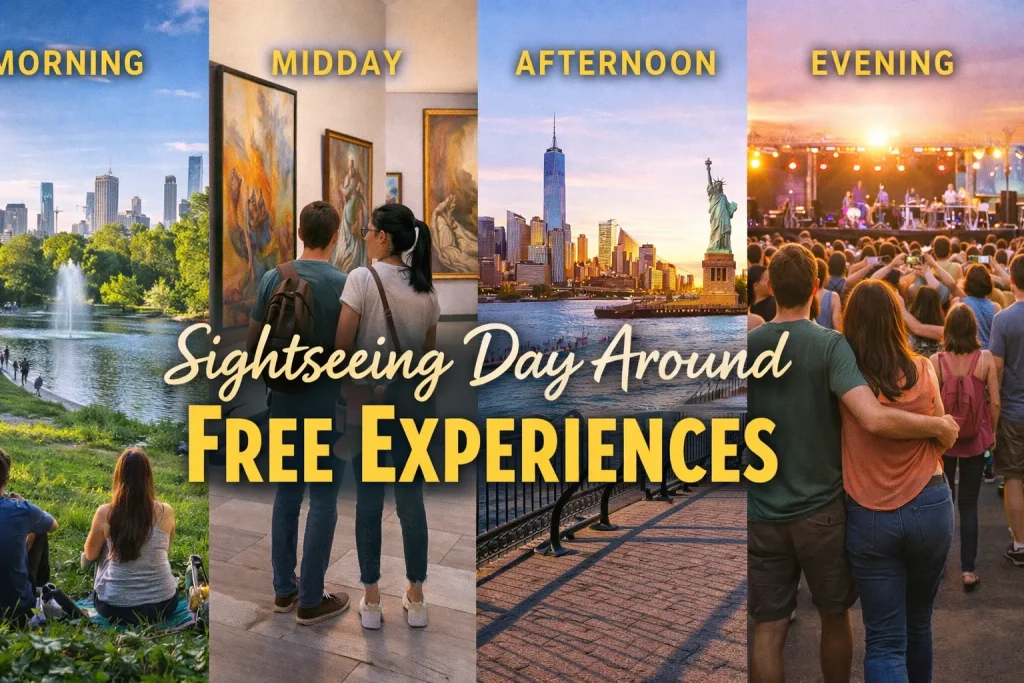
The easiest way to plan a low-cost day is to stay in one part of the city and layer free stops together.
A simple structure looks like this:
- Start with a park, waterfront, or city walk in the morning
- Add a museum, gallery, library, or cultural center around midday
- Explore a neighborhood on foot in the afternoon
- Finish with a free event, skyline view, or evening stroll
This works because it cuts transport costs, reduces wasted time, and keeps the day relaxed.
For example, in Chicago, you could combine Millennium Park, the Chicago Cultural Center, and a downtown walk. In New York City, you could pair the Staten Island Ferry with Lower Manhattan and a waterfront stop. In San Francisco, you could build a day around Golden Gate Park or a neighborhood walk, then add a free cultural stop later on. Official tourism sites in those cities all highlight these kinds of budget-friendly combinations.
Many travelers reduce costs by choosing one paid attraction for the whole day instead of several. That keeps the trip balanced and leaves room for better meals, longer stays, or an extra travel day.
When a Paid Attraction Is Still Worth the Money
Skipping every paid attraction is not always the best move.
A paid attraction is worth considering when it offers something hard to replace for free. That could be a famous observation deck, a major museum collection you truly care about, or a one-of-a-kind site that is central to the city.
A useful test is to ask:
- Would I still choose this if I could only pay for one attraction today?
- Does it offer something I cannot get from a park, public viewpoint, museum free hour, or neighborhood walk?
- Is this one of the main reasons I wanted to visit this city?
If the answer is yes, paying may be the smart choice. This is also a good moment to consider whether bundled entry options make sense for your trip—especially if you’re weighing multiple attractions; it helps to understand Are city passes worth it?
Best City-by-City Examples for Budget Travelers
New York City
New York can be expensive, but it offers budget travelers plenty of free options. NYC Tourism highlights budget-friendly sightseeing across the city, including public spaces, parks, waterfront areas, and free museum opportunities. The Staten Island Ferry and Brooklyn Bridge Park are especially useful because they combine city views with no admission cost.
San Francisco
San Francisco is easier to enjoy on a budget than many first-time visitors expect. SF Travel highlights a wide range of free attractions, including iconic sights, free scenic stops, neighborhood exploration, and museum-related free options.
For many travelers, the city’s strongest value comes from combining views, parks, and walking routes rather than chasing paid attractions all day, especially when planning your trip around budget travel in San Francisco strategies.
Chicago
Chicago is one of the best cities for cheap sightseeing in the USA because so many strong attractions sit close together. Official city resources highlight free museums and attractions year-round, plus free programming, public art, and the Chicago Cultural Center.
Millennium Park is an easy anchor because it connects well with other central sights—making it a great example of how to approach budget travel in Chicago.
Washington, D.C.
Washington, D.C., is one of the most expensive cities to sightsee on a budget. Official tourism resources emphasize the Smithsonian museums, National Gallery of Art, monuments, memorials, and many free events, which means travelers can build a full day around culture and major landmarks without stacking ticket costs.
Boston
Boston works well for travelers who enjoy walking and history. Meet Boston promotes free things to do across museums, festivals, performances, and major city trails. The Freedom Trail and Black Heritage Trail are especially useful because they combine sightseeing, local context, and low cost in one format.
Seattle
Seattle can be expensive, but its official tourism resources highlight several useful free or low-cost options, including Olympic Sculpture Park, Seattle walking tours, event listings, and free cultural spaces such as the Frye Art Museum. That makes it a good city for travelers who prefer open-air sightseeing mixed with a few cultural stops.
Final Tips for Planning Around Free Activities
Check official tourism and museum calendars before your trip. Free admission windows, event schedules, and neighborhood programming can change by season.
Group attractions by area instead of by category. A park, museum, public square, and food stop in the same neighborhood usually work better than jumping across town for separate deals.
Keep one free indoor option ready in case of bad weather. Libraries, cultural centers, museum free windows, and public markets are often the easiest backups.
And do not assume free means low value. In expensive cities, some of the most memorable parts of a trip are the simplest ones: a skyline walk, a public garden, a waterfront sunset, or an afternoon in a neighborhood you were not rushing through.
Conclusion
The best free things to do in expensive U.S. cities are not just backup options for travelers on a tight budget. They are often the activities that make a trip feel more relaxed, more local, and more enjoyable. If you plan around parks, walks, waterfronts, museums, and city events first, you can see more of an expensive city without paying for every hour of the day.
FAQ
What are the best free things to do in expensive U.S. cities?
The best options are usually major parks, waterfront walks, free museums, public art, neighborhood routes, and local events. Official tourism sites for cities like New York, Chicago, San Francisco, Boston, Seattle, and Washington, D.C. all promote these kinds of budget-friendly experiences.
Are museums free in major U.S. cities?
Some are always free, while others offer free entry on specific days or at certain hours. Washington, D.C. is the strongest example because many of its major museums are free year-round, while cities like New York, Chicago, San Francisco, Boston, and Seattle also promote free museum access in different ways.
How do travelers find free city events during a trip?
A practical way is to check the city’s official tourism event calendar before your trip and again once you arrive. These calendars often include festivals, concerts, free cultural programs, seasonal events, and neighborhood activities.
Can you sightsee in New York or San Francisco without spending much?
Yes. Both cities have enough free parks, public viewpoints, neighborhood walks, waterfront areas, and museum-related options to build a strong day around low-cost sightseeing. Official tourism resources in both cities actively promote those options.
When is a paid attraction still worth the money?
A paid attraction is usually worth it when it offers something difficult to replace for free, such as a major viewpoint, a priority museum, or a landmark experience that matters to your trip. The key is to be selective, not automatic.

Silas Harlow
Silas Harlow is a travel writer and budget travel researcher at TravelBee Trips. He creates practical guides covering destinations, accommodation, transportation, attractions, safety, and affordable travel planning. His research uses official tourism resources, government websites, maps, and established service providers where available. Because travel information changes frequently, readers should verify important details before booking. View his complete author profile and editorial approach.