Bali is one of the most magical islands in the world. 🌺 Nestled in Indonesia, this tropical paradise is known for its golden beaches, emerald rice terraces, ancient temples, vibrant culture, and warm, friendly locals.

Whether you are traveling alone, with friends, family, or as a couple, Bali has something for everyone. From adventure-filled days exploring waterfalls and cliffs to serene moments at yoga retreats and quiet temples, the island offers experiences that are both unforgettable and unique. This complete guide will take you through everything you need to know before visiting Bali, helping you plan your trip with ease and confidence.
Why Visit Bali?
Bali is much more than just a beach destination. It is a vibrant blend of culture, adventure, and relaxation. As you stroll through the streets of Ubud, you’ll find charming art markets, beautifully carved temples, and rice terraces that seem to stretch endlessly into the horizon. On the beaches, whether you are at the lively Kuta or the serene Nusa Dua, you can try surfing, take a swim in the calm waters, or simply relax while listening to the sound of waves crashing on the shore.
Beyond its landscapes, Bali is also a wellness haven. Yoga and meditation retreats, spa treatments, and holistic wellness programs are found throughout the island, offering travelers a peaceful escape from the busy pace of modern life. Adventure seekers will love the waterfalls, white-water rafting, and hiking opportunities, while couples can enjoy romantic sunsets, private villas, and beachside dinners. Whatever your interests, Bali has something to make your trip unforgettable.
Entering Bali
Before embarking on your journey, it is important to know how to enter Bali smoothly. Most international visitors can obtain a visa on arrival for 30 days, but your passport must have at least six months of validity remaining. Check the Indonesian government website for the most current visa information before your trip.
Bali’s main airport, Ngurah Rai International Airport (Denpasar), receives direct flights from major hubs in Asia, Australia, and connecting flights fr om Europe. Upon arrival, travelers have several transport options, including taxis, ride-hailing apps like Grab and Gojek, or pre-booked private drivers. Airport taxis are reliable, but it is always recommended to confirm the fare before starting your journey.
Health and safety are also important considerations. Carry all necessary documents, and check for recommended vaccinations such as Hepatitis A and Typhoid. By preparing ahead, your trip can begin stress-free and enjoyable.
Before flying, check the latest visa rules on the official Indonesia eVisa website.
Bali Regions Overview
Bali is a diverse island, and each region has its own personality and attractions. Understanding the different areas will help you plan your itinerary and decide where to stay.
Ubud, often referred to as the cultural heart of Bali, is renowned for its art markets, lush rice terraces, temples, and yoga retreats. It is ideal for families, solo travelers, and those seeking wellness experiences. Seminyak and Canggu are more modern and stylish, with trendy cafes, boutique shops, and vibrant beach areas. These regions are perfect for couples and travelers looking for a mix of relaxation and modern lifestyle experiences.
For budget-conscious travelers and surfers, Kuta and Legian offer lively streets, affordable accommodations, and beginner-friendly surf spots. Uluwatu is dramatic and romantic, featuring cliffside temples, quiet beaches, and stunning sunset views. Finally, the Nusa Islands—Penida, Lembongan, and Ceningan—offer adventure and tranquility with their hidden beaches, snorkeling spots, and breathtaking cliffs.
When to Visit Bali
Bali enjoys a tropical climate with warm temperatures throughout the year, but it is important to choose the right season for your activities. The dry season, from April to October, is ideal for sightseeing, outdoor adventures, and beach days, with clear skies and calm seas. The wet season, from November to March, brings occasional heavy rain, but the island becomes lush and green, and waterfalls are at their most impressive.
Bali’s festivals add another layer of cultural richness. Nyepi, the Balinese New Year, is a unique day of silence when the entire island stays home, with no traffic or flights—a once-in-a-lifetime cultural experience. Galungan and Kuningan celebrate the victory of good over evil, with streets decorated with bamboo poles, temples filled with offerings, and locals performing traditional dances. Planning your trip around these events can provide an unforgettable insight into Balinese culture.
International visitors should also check the official Bali Tourist Levy website before arriving in Bali.
Getting Around Bali
Exploring Bali is relatively easy, with several transportation options to suit every type of traveler. Scooters are the most popular choice for tourists due to their affordability and convenience, allowing you to navigate through narrow streets and reach beaches or temples quickly. For those who prefer comfort and safety, taxis and ride-hailing apps like Grab and Gojek are widely available. Families or travelers planning multiple stops in one day may find private drivers or guided tours more convenient, as they provide local knowledge and help avoid logistical stress.
Safety is important when moving around Bali. Always wear a helmet when riding a scooter, use GPS apps to navigate, and confirm fares when taking taxis. Being prepared ensures a smooth and enjoyable travel experience.
Top Destinations in Bali
Bali is home to some of the world’s most beautiful beaches, ancient temples, and hidden islands.
The beaches vary greatly, from the bustling sands of Kuta Beach, where beginners learn to surf, to the calm waters of Nusa Dua, perfect for swimming and families. For a more tranquil escape, Balangan and Padang Padang offer serene settings for watching the sunset or relaxing away from crowds.
Temples in Bali are a window into its spiritual and cultural heritage. Tanah Lot, perched on a rock in the ocean, offers iconic sunset views. Uluwatu Temple, perched on cliffs, is famous for traditional Kecak fire dance performances at dusk. Besakih Temple, known as Bali’s Mother Temple, is the largest and holiest temple on the island, set against the backdrop of Mount Agung. Visiting these temples allows travelers to experience Balinese traditions and architecture firsthand.
For those seeking adventure, the Nusa Islands, Penida, Lembongan, and Ceningan, are perfect for snorkeling, exploring hidden beaches, and hiking to breathtaking cliffs. These islands are a calm escape from the busier parts of Bali and provide excellent opportunities for photography and outdoor activities.
🔗 Check out our cluster guides for detailed experiences: [Best Beaches in Bali], [Bali Temples], [Nusa Islands Travel Guide]
Activities & Experiences
Bali caters to a wide range of interests. Families can enjoy rice terrace walks in Ubud, refreshing swims under waterfalls such as Tegenungan and Sekumpul, or white-water rafting on the Ayung River. Exploring the Monkey Forest provides an interactive and educational experience for children and adults alike.
Couples visiting Bali will find plenty of romantic options. Sunset cruises in Seminyak offer unforgettable views over the ocean, private villas provide peaceful seclusion, and intimate dinners on the beach allow for a truly memorable experience.
Wellness travelers will enjoy Bali’s yoga and meditation retreats, often set in serene locations overlooking rice terraces. Spa treatments and holistic wellness programs are available throughout the island, making it easy to relax, recharge, and reconnect.
🔗 For more details, see: [Bali Adventure Guide], [Best Activities for Couples], [Bali Yoga and Wellness Retreats]
Bali Food & Dining Guide
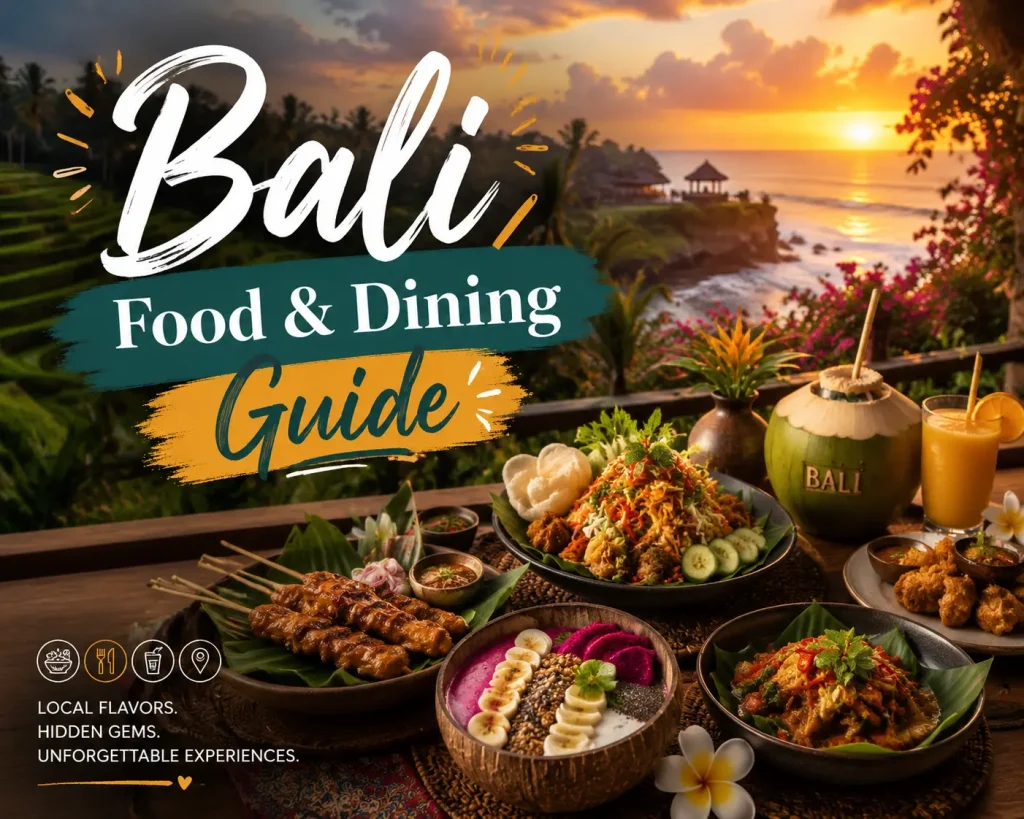
Bali is a haven for food lovers. The island offers an array of traditional dishes such as Nasi Goreng, Indonesia’s famous fried rice often topped with a fried egg; Babi Guling, a flavorful roasted pork specialty; Satay, grilled meat skewers served with peanut sauce; and Lawar, a mix of vegetables with coconut and spices, usually paired with rice.
Street food is fresh, inexpensive, and provides an authentic taste of Balinese culture. Eating at local warungs not only supports small businesses but also allows travelers to experience traditional flavors firsthand.
🔗 Learn more: [Bali Food Guide: Top Dishes You Must Try]
Where to Stay in Bali
Bali offers accommodation for every budget and preference. Luxury resorts in Seminyak and Uluwatu provide private beaches, infinity pools, and spa services, ideal for honeymooners and couples seeking comfort. Mid-range hotels in Ubud and Canggu offer convenience and comfort, close to markets, cafes, and yoga studios. Budget options in Kuta and Legian include hostels and guesthouses, which are wallet-friendly without compromising accessibility to beaches and attractions.
🔗 See our detailed guide: [Where to Stay in Bali]
Traveling in Bali on a Budget
Travelers can enjoy Bali without overspending. Eating at local warungs provides authentic meals at lower prices, while renting scooters is more cost-effective than taxis. Budget accommodations and homestays offer comfort and value. Planning day trips independently rather than booking expensive tours also helps save money while allowing flexibility.
🔗 Read our full guide: [How to Travel Bali on a Budget]
Suggested Bali Itinerary
For a short 3-day trip, start at Kuta Beach, enjoy the sunset at Tanah Lot, explore Ubud’s rice terraces, visit the Monkey Forest, and take a day trip to Nusa Penida for snorkeling and cliff viewpoints. A 5-day itinerary can add Uluwatu Temple, spa experiences, and a day exploring Seminyak’s cafes and shopping. A 7-day stay allows for full exploration, including hidden waterfalls, cultural workshops, and adventure activities across the island.
Practical Travel Tips
Traveling in Bali is easy with some preparation. Carry Indonesian Rupiah (IDR) for small purchases, and get a local SIM card for data and navigation. Health-wise, drink bottled water, apply sunscreen regularly, and exercise caution on roads, as traffic can be hectic. Packing essentials include light clothing, swimwear, comfortable shoes, a rain jacket, and a universal travel adapter.
FAQ – Bali Travel
Is Bali safe for solo travelers?
Yes, Bali is generally safe. Stay aware of your surroundings and secure your belongings.
How long should I stay in Bali?
A trip of 3–7 days is ideal, depending on your interests and pace.
Do I need a visa to visit Bali?
Many nationalities are eligible for a visa-on-arrival, but always check current regulations.
What is the best way to get around?
Scooters are convenient, but taxis, ride apps, or private drivers may be better for families or longer trips.
What is the best time to visit Bali?
The best time to visit Bali is usually during the dry season, when the weather is better for beaches, sightseeing, waterfalls, temples, and outdoor activities. However, Bali can be visited all year depending on your budget and travel style.
Is Bali expensive for tourists?
Bali can be budget-friendly or expensive depending on how you travel. Local food, guesthouses, and simple transport can keep costs low, while private villas, luxury resorts, beach clubs, and private drivers can increase your budget.
What should I wear in Bali?
Light and comfortable clothing is best for Bali’s warm weather. For temples and religious sites, dress respectfully by covering your shoulders and knees. Many temples also require visitors to wear a sarong.
Can I use credit cards in Bali?
Credit cards are accepted in many hotels, restaurants, cafes, and larger shops. However, it is still useful to carry some cash for local warungs, markets, small shops, parking fees, and places outside tourist areas.
Is Bali good for families?
Yes, Bali is a great destination for families. Areas like Nusa Dua, Sanur, and Seminyak offer family-friendly resorts, beaches, restaurants, and activities. Families may prefer taxis or private drivers instead of scooters for safer and easier travel.
More Bali Travel Guides to Help Plan Your Trip
This Bali travel guide gives you a complete overview of the island, but every traveler needs detailed information for different parts of the trip. To make your Bali planning easier, we have created separate guides for beaches, food, budget, itinerary, temples, places to stay, and important travel tips.
Use the guides below to plan your Bali trip step by step and choose the right information based on your travel style.
Best Time to Visit Bali
Before booking your trip, it is important to understand Bali’s weather, dry season, rainy season, and the best months to visit. Our best time to visit Bali guide helps you choose the right time for beaches, sightseeing, honeymoon trips, family holidays, and budget travel.
Where to Stay in Bali
Choosing the right area can change your whole Bali experience. Ubud is best for culture and rice terraces, Seminyak is great for luxury and nightlife, Canggu is popular for cafes and surfing, Uluwatu is perfect for cliffs and sunsets, while Nusa Dua is ideal for families and resorts. Read our Where to Stay in Bali guide for a complete area comparison.
Bali Itinerary
A well-planned Bali itinerary helps you save time and enjoy more places without rushing. Whether you are visiting Bali for 3 days, 5 days, 7 days, or 10 days, a proper route can help you explore beaches, temples, waterfalls, rice terraces, and local markets easily.
Best Beaches in Bali
Bali is famous for its beautiful beaches. Some beaches are perfect for surfing, some are better for swimming, and others are ideal for sunsets, photography, and relaxing. Our best beaches in Bali guide will help you choose the right beaches for your trip.
Bali Food Guide
Food is an important part of the Bali travel experience. From local warungs and traditional Balinese dishes to modern cafes and beachfront restaurants, Bali offers many dining options for every budget. Read our Bali food guide to know what to eat and where to eat during your trip.
Bali Budget Travel Guide
Bali can be affordable or expensive depending on your travel style. Budget travelers can save money by staying in guesthouses, eating local food, and using transport wisely. Our Bali budget travel guide helps you understand trip costs and plan your money better.
Bali Temples Guide
Bali is known for its spiritual culture and beautiful temples. Popular temples like Uluwatu Temple, Tanah Lot, Besakih Temple, and Tirta Empul are must-visit places. Our Bali temples guide also explains dress codes, entrance rules, and respectful behavior.
Nusa Islands Travel Guide
The Nusa Islands are among the most beautiful places near Bali. Nusa Penida is famous for dramatic cliffs and viewpoints, while Nusa Lembongan and Nusa Ceningan offer a more relaxed island experience. Read our Nusa Islands travel guide to plan your island trip properly.
Things to Do in Bali
There are many amazing things to do in Bali, including visiting temples, exploring waterfalls, relaxing on beaches, walking through rice terraces, enjoying beach clubs, trying local food, shopping in local markets, and joining cultural activities. Our things to do in Bali guide covers the best activities and attractions.
Bali Travel Tips for First-Time Visitors
If you are visiting Bali for the first time, a few practical tips can make your trip easier. Plan your days carefully, keep some cash, respect temple rules, avoid overpacking your itinerary, check transport prices, and learn basic local customs before your trip. Read our Bali travel tips for first-time visitors guide before you go.
Conclusion
Bali is more than just a travel destination—it’s an experience that blends beaches, culture, adventure, wellness, and cuisine. 🌴 By using this guide, you can explore the island with confidence, enjoy its diversity, and create lasting memories that will make your trip truly unforgettable.
Planning your Bali trip becomes easier when you have simple tips, budget advice, and destination ideas in one place.
Explore more helpful travel guides on TravelBee Trips.

Silas Harlow
Silas Harlow is a travel writer and budget travel researcher at TravelBee Trips. He creates practical guides covering destinations, accommodation, transportation, attractions, safety, and affordable travel planning. His research uses official tourism resources, government websites, maps, and established service providers where available. Because travel information changes frequently, readers should verify important details before booking. View his complete author profile and editorial approach.