If you work for the government, military, defense industry, or any organization that handles sensitive information, you may hear this question:
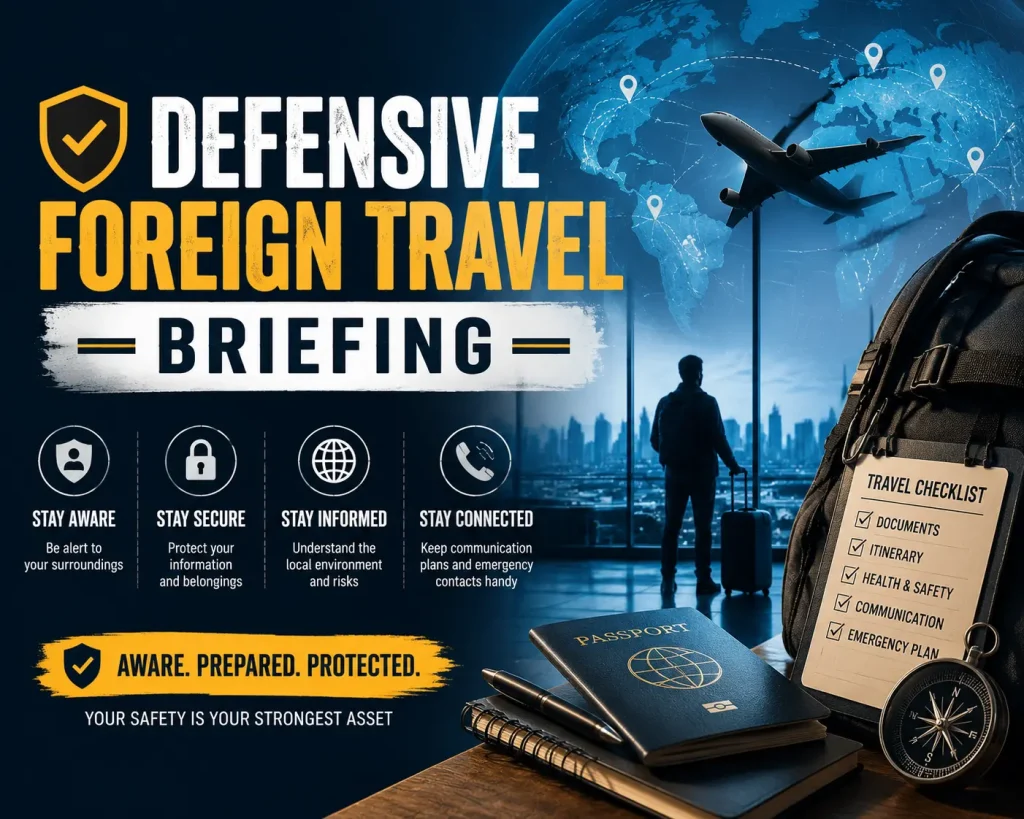
When must you receive a defensive foreign travel briefing?
The simple answer is this:
You may need to receive a defensive foreign travel briefing before foreign travel, especially if your organization requires it. In many workplaces, you may also need one every year as part of annual security awareness training.
However, the exact rule is not the same for everyone.
It can depend on your employer, agency, security clearance status, job role, contract, destination country, and reason for travel.
That is why the safest answer is simple: check with your security office before you travel.
Important Disclaimer
This article is for general educational information only. It is not legal advice, security clearance advice, official government guidance, military policy, contractor compliance advice, or a substitute for your organization’s rules.
Defensive foreign travel briefing requirements can vary by agency, employer, contract, clearance level, job role, destination, and travel purpose.
Always confirm the correct requirement with your security office, supervisor, Facility Security Officer, command security manager, or official policy source before traveling.
Quick Answer: When Must You Receive the Briefing?
You must usually receive a defensive foreign travel briefing before foreign travel if your organization requires it.
This is especially important if you are traveling for official business, hold a security clearance, work in a sensitive position, or visit a high-risk country.
Some organizations also require this briefing at least once a year as part of annual security awareness training.
Because rules can vary, always confirm the exact requirement with your security office or employer before traveling.
| Situation | Briefing May Be Needed? |
|---|---|
| Before official foreign travel | Usually, yes, if required by policy |
| Before personal foreign travel | Often required for cleared or sensitive roles |
| Once every year | Common in some organizations |
| Before high-risk travel | Usually yes |
| After major job or clearance changes | May be required |
| After returning from foreign travel | A debrief may be required |
The main goal is simple. The briefing helps you understand risks before you leave the country.
It also helps you know what to report when you return.
What Is a Defensive Foreign Travel Briefing?
A defensive foreign travel briefing is a safety and security briefing given before international travel.
It teaches travelers how to protect themselves, their devices, their documents, and their organization’s information while abroad.
It may cover personal safety, foreign intelligence threats, suspicious contacts, cyber risks, local laws, emergency contacts, and reporting rules.
The Center for Development of Security Excellence explains that its CI Foreign Travel Briefing course is designed to help travelers recognize foreign threats while traveling abroad, and its listed audience includes Facility Security Officers, DoD or federal government personnel, military personnel, civilian personnel, and industrial personnel.
Why Is It Called “Defensive”?
It is called defensive because the purpose is to protect you before a problem happens.
The briefing does not only talk about travel rules. It also teaches you how to reduce risk.
For example, it may explain how to avoid sharing sensitive information, how to spot unusual questions, and how to stay careful in hotels, airports, taxis, meetings, or public places.
In simple words, the briefing helps you travel with better awareness.
Who Usually Needs a Defensive Foreign Travel Briefing?
Not every traveler will use the same process.
A normal tourist may not receive this type of workplace briefing. However, some people may need it because of their job or access to sensitive information.
Government Employees
Government employees may need a foreign travel briefing before official travel.
They may also need to follow rules for personal foreign travel, depending on their role and agency.
Military Personnel
Military personnel may need approval, travel reporting, force protection guidance, and a security briefing before going abroad.
The exact process can depend on command rules and destination risk.
Defense Contractors
Defense contractors and cleared industry personnel may also need a briefing.
This is especially important if they work with classified information, sensitive projects, defense technology, or government contracts.
Security Clearance Holders
People with a security clearance may have extra reporting responsibilities, depending on their organization’s policy.
If they travel outside the country, they may need to report the trip before leaving. They may also need to complete a briefing or debriefing.
Again, the exact rule depends on the person’s organization and clearance-related policy.
Who May Not Need a Defensive Foreign Travel Briefing?
Most normal tourists do not receive a defensive foreign travel briefing from a security office before vacation travel.
For example, a person taking a regular family holiday may only need normal travel planning. This can include checking passport rules, visa requirements, travel advisories, health guidance, and local laws.
A normal tourist may focus more on destination basics like passport validity, local transport, health tips, and entry rules, as shown in our Bali travel guide.
However, the situation can be different if you work for the government, military, defense industry, or an organization that handles sensitive information.
If you are not sure, ask your employer or security office before traveling.
When Must You Receive a Defensive Foreign Travel Briefing?
The timing matters.
A briefing is most useful before travel, not after the trip is already finished.
Before Official Foreign Travel
In many organizations, you are required to receive the briefing before official foreign travel.
Official foreign travel means travel connected to your work, agency, military duty, contract, conference, meeting, assignment, or official business.
The briefing helps you understand the risks in the country you are visiting.
It may also explain what information you should not discuss, what devices you should protect, and what to do if someone asks unusual questions.
Before Personal or Unofficial Foreign Travel
In some organizations, personal foreign travel also needs to be reported.
This may apply if you have a security clearance, work in a sensitive position, or have access to classified or controlled information.
For example, if you are going abroad for vacation, family reasons, study, or personal business, you may still need to notify your security office.
Do not assume that personal travel is always exempt.
At Least Once a Year When Required
Some workplaces require an annual foreign travel briefing or yearly security refresher.
This annual briefing usually covers general travel risks.
It may remind employees about suspicious contacts, foreign intelligence threats, cyber safety, local laws, and reporting responsibilities.
However, an annual briefing may not replace a required pre-travel briefing.
If your organization requires trip-specific approval or destination-specific guidance, you may still need a separate briefing before departure.
Before Visiting High-Risk Countries
If your destination has a higher security risk, you may need a special briefing.
This type of briefing may focus on local threats, terrorism risks, crime, detention risks, surveillance, health concerns, or cyber threats.
Travel.State.gov says travelers should review the current travel advisory, entry requirements, local laws, and tips from the U.S. embassy before international travel. You can check official Travel Advisories while planning your trip.
After Job, Policy, or Clearance Changes
You may also need a briefing if your role changes.
For example, you may move into a more sensitive job, receive a new clearance, start working on a protected project, or come under a new travel policy.
In these cases, your organization may require updated security training before you travel.
Annual Briefing vs. Pre-Travel Briefing
Many people confuse these two.
They sound similar, but they are not always the same.
What an Annual Briefing Covers
An annual briefing is usually general.
It may cover common foreign travel risks, reporting rules, cyber safety, suspicious contacts, and personal safety.
It is often used as refresher training.
The goal is to keep security awareness fresh throughout the year.
What a Pre-Travel Briefing Covers
A pre-travel briefing is more specific.
It may focus on the country you are visiting, your travel dates, your hotel, your meetings, your route, your devices, and your reason for travel.
It may also tell you what to do if you lose a passport, get questioned, notice surveillance, or receive unusual contact.
Why You May Need Both
You may need both because they serve different purposes.
The annual briefing gives general awareness.
The pre-travel briefing prepares you for a real trip.
So, if you completed an annual briefing six months ago, do not assume you are automatically cleared for every trip.
Ask your security office before you travel.
What Topics Are Covered in a Defensive Foreign Travel Briefing?

A good foreign travel briefing covers practical risks.
It should not confuse the traveler. It should help the traveler stay safe and know what to do.
Foreign Intelligence Threats
Some travelers may be targeted because of where they work, what they know, or what projects they support.
A briefing may explain how foreign intelligence services collect information.
This can happen through casual conversations, professional events, online contact, hotel surveillance, or direct questioning.
Suspicious Contacts
A suspicious contact is not always obvious.
Sometimes it may look like a normal conversation.
Someone may ask too many questions about your job, your team, your technology, your travel plans, or your personal life.
If something feels unusual, you may need to report it after the trip.
Cybersecurity Risks
Cyber risks are a major part of foreign travel.
Your phone, laptop, tablet, USB drive, or email account can become a target.
A briefing may tell you to avoid public Wi-Fi, avoid public charging stations, use strong passwords, update devices, and reduce sensitive data on your devices before travel.
Personal Safety
The briefing may also cover simple safety habits.
For example, stay aware in airports, hotels, markets, taxis, restaurants, and public events.
It may also tell you how to keep a low profile and avoid drawing unnecessary attention.
Local Laws and Customs
Local laws can be very different from those in your home country.
Something legal at home may be illegal abroad.
A briefing may remind you to understand local rules before traveling.
This can include rules about photography, medicine, religion, speech, driving, alcohol, documents, and public behavior.
Emergency Contacts
You should know who to contact if something goes wrong.
This may include your hotel, local emergency number, embassy or consulate, security office, supervisor, family contact, and travel insurance support.
What Should You Do Before Foreign Travel?
Before you travel, take a few careful steps.
These steps can help you avoid problems and meet your organization’s requirements.
Notify Your Security Office
Tell your security office or supervisor about the trip as early as possible.
Do not wait until the last day.
They may need time to review your destination, approve your travel, schedule a briefing, or give you reporting instructions.
Complete the Required Briefing
If a briefing is required, complete it before departure.
Do not treat it as a formality.
Listen carefully and ask questions if anything is unclear.
Check Travel Advisories
Check the current risk level for your destination.
Look for information about crime, terrorism, civil unrest, health risks, entry rules, and local laws.
If your trip involves ferries, island transfers, or limited local information, our remote island travel planning guide shows why confirming routes, costs, weather, and accommodation before booking is important.
This is useful even if your travel is personal.
Secure Your Devices
Before travel, remove files you do not need.
Update your phone and laptop.
Use a strong password.
Turn on device tracking if allowed.
Avoid carrying sensitive work information unless your organization approves it.
Save Emergency Contacts
Keep emergency contacts in your phone and on paper.
Your phone battery may die, or your phone may get lost.
A paper backup can help in a difficult situation.
Before Travel Checklist
Use this simple checklist before leaving.
| Task | Completed? |
|---|---|
| Notify the security office or supervisor | ☐ |
| Complete the required foreign travel briefing | ☐ |
| Check the travel advisory for the destination | ☐ |
| Confirm passport and visa requirements | ☐ |
| Save embassy or consulate contact | ☐ |
| Remove unnecessary sensitive data from devices | ☐ |
| Keep copies of important documents | ☐ |
| Share the itinerary with a trusted contact | ☐ |
| Understand reporting rules for return | ☐ |
What Should You Do During Foreign Travel?
Once you are abroad, use simple safety habits every day.
You do not need to be afraid. But you should stay aware.
Stay Alert in Public Places
Be careful in airports, hotels, train stations, meetings, restaurants, and tourist areas.
Keep your bag close.
Do not leave your phone, laptop, or documents unattended.
Before arriving in a new city, checking airport transfer options can help you avoid last-minute transport decisions when you are tired, rushed, or unfamiliar with the area.
Avoid Talking About Sensitive Work
Do not discuss classified, sensitive, proprietary, or internal work details in public.
This includes conversations in taxis, hotel lobbies, restaurants, elevators, and conferences.
You never know who may be listening.
Be Careful With Wi-Fi
Public Wi-Fi can be risky.
Avoid logging into sensitive accounts on open networks.
If your organization gives you special cyber rules for travel, follow them exactly.
Watch for Unusual Questions
Be careful if someone asks too many questions about your work, access, projects, technology, coworkers, or organization.
A friendly conversation can still become risky.
If it feels suspicious, remember the details and report it when required.
Protect Your Documents
Keep your passport, work documents, and travel papers secure.
Use the hotel safe if appropriate.
Carry copies separately from the originals.
What Happens After You Return?
Your responsibility may not end when the trip ends.
Some organizations require a post-travel debrief.
This is a short review of what happened during your trip.
Complete a Post-Travel Debrief If Required
A post-travel debrief helps the security office learn if anything unusual happened.
It may include questions about suspicious contacts, lost devices, unusual questioning, or unexpected incidents during the trip.
Report Suspicious Activity
You may need to report events such as:
| Event | Why It Matters |
|---|---|
| Strange questions about your work | Could be an attempted information collection |
| Lost or stolen device | Could expose data |
| Hotel room search | Could suggest surveillance |
| Unusual customs inspection | May need review |
| Contact from an unknown person after the return | Could be a follow-up targeting |
| Requests for sensitive information | Serious security concern |
Do not decide by yourself that something is “not important.”
If your policy says to report it, report it.
Check Your Devices
After returning, your organization may ask you to inspect or turn in devices used during travel.
This can help detect malware, tampering, or other cyber problems.
Follow your workplace rules.
Common Mistakes to Avoid
Many travelers make simple mistakes.
Avoiding these mistakes can protect you and your organization.
Waiting Until the Last Minute
Do not request the briefing one day before travel.
Your security office may need more time.
Start early.
Thinking the Annual Briefing Is Always Enough
An annual briefing is helpful, but it may not cover your specific destination.
If you are traveling to a higher-risk place, you may need a separate briefing.
Not Reporting Personal Travel
Some cleared employees must report personal foreign travel.
Do not assume only official travel matters.
Ask your security office.
Carrying Too Much Sensitive Information
Do not take files, devices, or documents you do not need.
The less sensitive information you carry, the lower the risk.
Ignoring Local Laws
Foreign laws can be strict.
Learn the basic rules before you go.
This can help you avoid serious trouble.
Defensive Foreign Travel Briefing Checklist
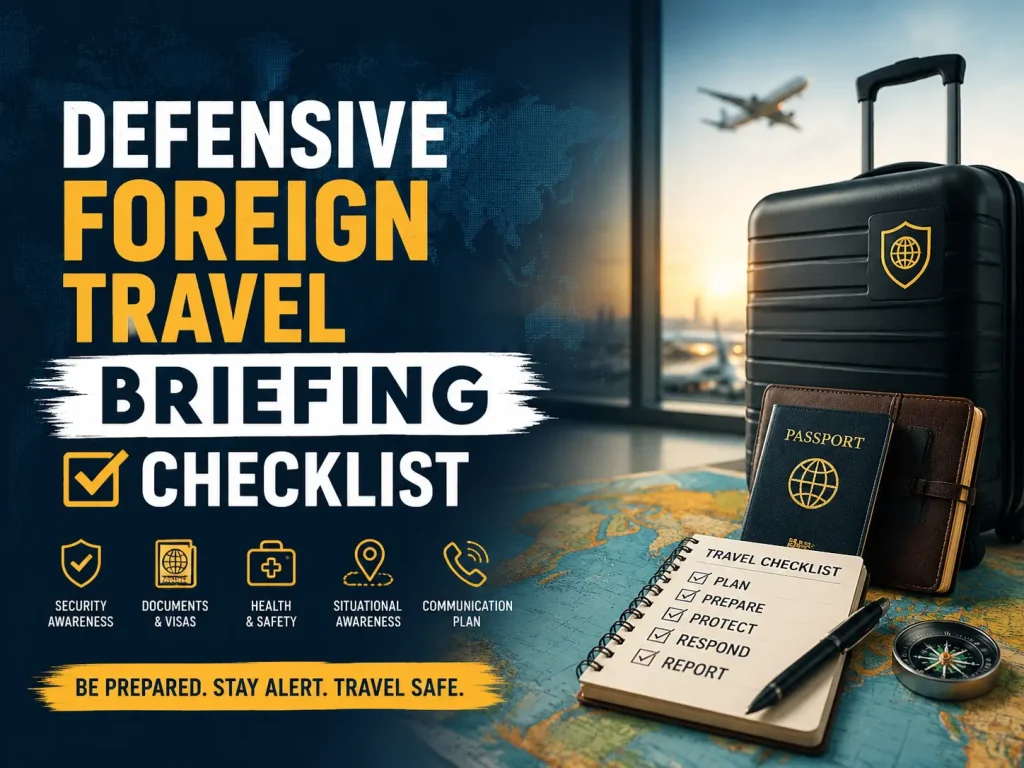
Here is a simple checklist you can use.
Before Travel
| Action | Why It Matters |
|---|---|
| Report planned travel if required | Helps meet policy rules |
| Complete briefing | Prepares you for risks |
| Review destination risks | Helps you plan safely |
| Secure devices | Reduces cyber risk |
| Save contacts | Helps in emergencies |
During Travel
| Action | Why It Matters |
|---|---|
| Stay aware | Reduces personal safety risk |
| Avoid sensitive discussions | Protects information |
| Use safe internet habits | Reduces cyber threats |
| Keep documents secure | Prevents travel problems |
| Note unusual contacts | Helps with reporting |
After Travel
| Action | Why It Matters |
|---|---|
| Complete debrief if required | Supports security review |
| Report suspicious contacts | Helps detect targeting |
| Report lost or tampered items | Protects information |
| Check devices | Helps find cyber issues |
| Follow the security office instructions | Keeps you compliant |
FAQs About Defensive Foreign Travel Briefings
When must you receive a defensive foreign travel briefing?
You must usually receive a defensive foreign travel briefing before foreign travel if your organization requires it.
Many organizations also require an annual briefing as part of security awareness training.
Always check your security office’s policy before traveling.
Is a defensive foreign travel briefing required every year?
It can be required every year in some organizations.
Annual briefings are often used as refresher training. However, your employer, agency, command, or security office decides the exact requirement.
Do you need a briefing before every foreign trip?
You may need one before every foreign trip, especially if you are traveling for official business, going to a high-risk country, or working in a cleared or sensitive position.
Ask your security office before each trip.
Is the briefing required for personal foreign travel?
It may be required for personal travel if you hold a security clearance or work in a sensitive role.
Personal travel can still create security risks, so some organizations require reporting and briefing.
Who gives a defensive foreign travel briefing?
It may be given by a security officer, a Facility Security Officer, a supervisor, a command security manager, or another authorized official.
Some organizations may also use online training.
What is covered in a foreign travel security briefing?
It may cover personal safety, foreign intelligence threats, suspicious contacts, cyber risks, local laws, travel advisories, emergency contacts, and post-travel reporting.
Does an annual briefing replace a pre-travel briefing?
Not always.
An annual briefing may cover general security awareness, but your organization may still require a separate pre-travel briefing for a specific trip or destination.
What happens if you travel without completing the briefing?
That depends on your organization’s rules.
It could cause compliance issues, delayed approval, security concerns, or disciplinary action in some workplaces.
Always complete the required steps before travel.
Do defense contractors need foreign travel briefings?
Many defense contractors may need foreign travel briefings, especially if they are cleared personnel or work under security-related contract rules.
The correct process should be confirmed with the Facility Security Officer or the security office.
Final Thoughts
So, when must you receive a defensive foreign travel briefing?
The safest answer is:
You should receive it before foreign travel when required by your organization, and you may also need it annually if your workplace requires yearly security awareness training.
You may also need a special briefing before traveling to high-risk countries, after major job changes, or when your security office requires it.
The main purpose is not to make travel difficult.
The purpose is to help you travel safely, protect sensitive information, avoid risky situations, and know what to report when you return.
Before any foreign trip, do not guess.
Ask your security office, follow your organization’s rules, complete the required briefing, and travel with awareness.