Chicago is one of those cities where you can spend a lot of money fast, but you do not have to.
A trip here can get expensive if you book the wrong hotel, rely on ride-shares, eat only near tourist spots, or buy tickets for every famous attraction. But with the right plan, budget travel in Chicago is very realistic. The city has free lakefront views, public parks, walkable downtown areas, budget-friendly food, useful public transportation, and plenty of low-cost experiences that still feel memorable.

Chicago’s official tourism site also highlights free attractions, free museum days, free festivals, inexpensive attractions, lakefront areas, beaches, parks, and the Chicago Riverwalk as part of visiting Chicago on a budget.
This guide breaks down how to save money in Chicago without turning your trip into a boring “do nothing” vacation. You will find practical tips for transportation, hotels, food, attractions, itinerary planning, and common money mistakes to avoid.
Quick Answer: How to Do Budget Travel in Chicago
The best way to plan budget travel in Chicago is to stay near CTA public transportation, focus on free attractions like Millennium Park, Cloud Gate, Chicago Riverwalk, Lincoln Park Zoo, and the Lakefront Trail, eat in neighborhoods instead of tourist-heavy areas, and choose only one or two paid attractions.
A smart Chicago budget trip is not about skipping the best parts of the city. It is about avoiding the costs that do not add much value, like rental cars, expensive parking, overpriced tourist-zone meals, and too many paid attractions in one short trip.
Chicago Budget Travel Cost-Saving Breakdown
| Travel Category | Smart Budget Move | Why It Saves Money |
|---|---|---|
| Transportation | Use CTA trains and buses | Reduces ride-share and parking costs |
| Hotels | Stay near CTA access | Saves time and daily transport money |
| Food | Eat in neighborhoods | Better value than tourist-heavy blocks |
| Attractions | Mix free places with 1–2 paid experiences | Keeps the trip fun without overspending |
| Itinerary | Group nearby attractions together | Avoids wasted transit time and extra rides |
| Museum visits | Check free museum days first | Some museums offer select free admission days |
Chicago is often more affordable than cities like New York and San Francisco, but many budget strategies work across all major US destinations. See our complete guide to budget travel in expensive cities across the USA.
Is Chicago Good for Budget Travel?
Yes, Chicago can be a good city for budget travel — but only if you plan smart.
The expensive part is not always the attractions themselves. The real budget killers are often hotels, parking, ride-shares, downtown restaurants, and last-minute bookings. A traveler who rents a car, stays far from public transit, and eats near every tourist attraction will spend much more than someone who uses CTA, walks smart routes, and mixes free attractions with one or two paid experiences.
Why Chicago Can Feel Expensive for First-Time Visitors
Chicago is a major U.S. city, so some costs are naturally higher than in smaller destinations. Downtown hotels can be pricey during busy weekends. Parking near central areas can add up quickly. Popular observation decks, museums, boat tours, and restaurants can also push your total trip cost higher.
The mistake many visitors make is trying to do everything. They book every paid attraction, take ride-shares everywhere, and eat every meal around the same busy tourist zones. That is where the budget disappears.
A better approach is to choose your paid experiences carefully and build the rest of the trip around free or low-cost places.
Where Budget Travelers Can Save the Most
The best savings usually come from four areas: transportation, hotels, food, and attractions.
Chicago has strong public transportation, so most visitors do not need a rental car for a city-focused trip. CTA’s official fare page lists train, bus, transfer, and pass details, while its unlimited ride pass page explains that passes can be loaded onto a Ventra Card or a personal contactless bank card.
You can also save by choosing a hotel near a CTA station, eating in neighborhoods instead of only downtown, and planning free attractions before adding paid ones.
Best Free Things to Do in Chicago on a Budget
A budget Chicago trip should start with free experiences. Not because they are “cheap fillers,” but because many of Chicago’s best spots do not require a ticket.
Visit Millennium Park and Cloud Gate for Free
Millennium Park is one of the easiest wins for budget travelers. It is central, iconic, walkable, and free to visit. Cloud Gate, often called “The Bean,” is one of Chicago’s most photographed landmarks, and you do not need to pay anything to see it.
This is a smart first stop because you can combine it with nearby places like Maggie Daley Park, the Chicago Cultural Center, Grant Park, and the lakefront area. That gives you several hours of sightseeing without stacking up ticket costs.
Walk the Chicago Riverwalk Without Paying for a Tour
The Chicago Riverwalk is one of the best free ways to enjoy the city’s architecture and skyline. Paid architecture cruises are popular, and they can be worth it for some travelers, but walking the Riverwalk gives you a beautiful city experience without spending money.
You can walk, take photos, sit by the water, and enjoy the city from different angles. For a budget traveler, this is exactly the kind of experience that makes Chicago feel premium without a premium price.
Explore Lincoln Park Zoo and the Lakefront
Lincoln Park is a strong area for budget travelers because it gives you access to green space, lakefront views, neighborhood food, and one of the city’s best-known free attractions: Lincoln Park Zoo.
This area works especially well if you want a slower day outside downtown. You can walk through the park, visit the zoo, explore nearby streets, and continue toward the lakefront.
The Lakefront Trail also gives budget travelers open views of Lake Michigan, which is one of the best free experiences in Chicago. This is a strong option if you want a relaxing break from downtown crowds without paying for another attraction.
Check Free Museum Days Before Your Trip
Chicago has excellent museums, but museum tickets can add up fast if you are visiting with family or planning multiple stops. Free museum days can help, but the details change by museum, date, and eligibility. Some free days apply only to Illinois residents or specific groups.
Choose Chicago keeps an updated 2026 free museum days guide and lists major museums such as the Art Institute of Chicago, Adler Planetarium, Chicago History Museum, Field Museum, Shedd Aquarium, and more.
Do not build your full trip around free museum days without checking the rules first. Use them as a bonus, not as your only plan.
Free vs Paid Chicago Experiences for Budget Travelers
| Free Chicago Experience | Paid Alternative | Best Budget Choice |
|---|---|---|
| Chicago Riverwalk | Architecture cruise | Walk the Riverwalk if the budget is tight |
| Lakefront Trail | Observation deck | Use lakefront views for free skyline moments |
| Lincoln Park Zoo | Paid museum | The zoo is better for families on a tight budget |
| Millennium Park | Guided downtown tour | Explore it yourself for free |
| Chicago Cultural Center | Paid indoor attraction | Great free indoor option |
| Free museum days | Full-price museum tickets | Check dates before buying tickets |
How to Save Money on Transportation in Chicago
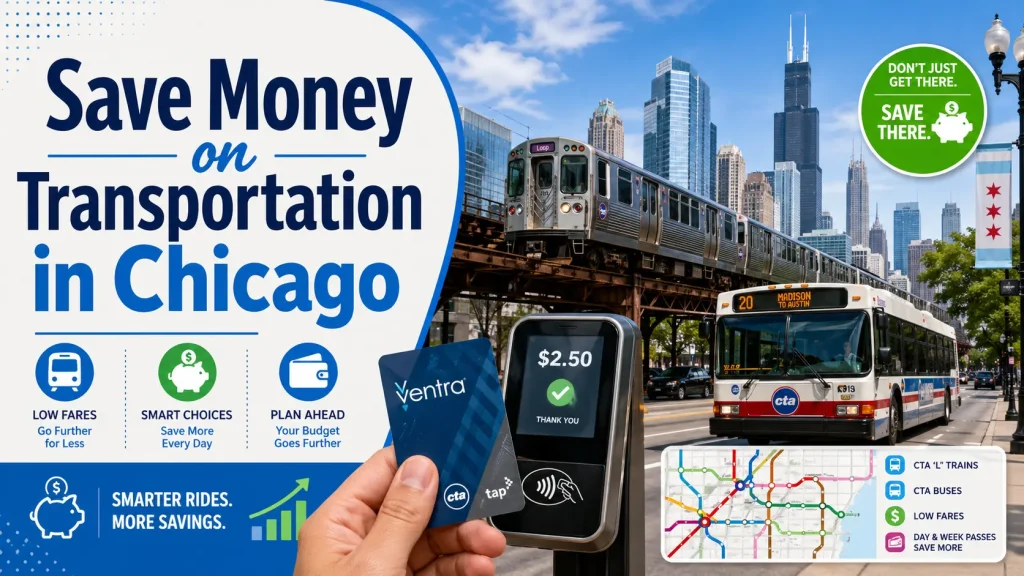
Transportation is where many travelers quietly overspend. A few short ride-shares may not seem like much, but over two or three days, they can cost more than a transit pass.
Use CTA Trains and Buses Instead of Renting a Car
For most visitors, renting a car in Chicago is unnecessary unless you are planning day trips outside the city. A car can create extra costs through parking, traffic stress, hotel fees, and fuel.
CTA trains and buses are usually a better option for budget travel in Chicago. The system connects many major areas, including downtown, airport routes, neighborhoods, and popular attractions.
Visitors can use a Ventra Card or contactless payment for CTA trains and buses, making it easier to get around Chicago without renting a car. CTA says unlimited ride passes can be loaded onto a Ventra Card or a personal contactless bank card.
For updated transit prices, check the official Chicago CTA fares and passes page before your trip, especially if you plan to use buses and trains for most of your Chicago sightseeing.
For more planning help, see our guide on Public Transportation in Expensive U.S. Cities.
Buy the Right CTA Pass for Your Trip
If you are taking multiple rides per day, a CTA pass may save money. CTA explains that unlimited ride passes are valid for a set period from first use, and its fare page lists CTA/Pace pass options.
A transit pass can be useful for a weekend trip if your plan includes airport travel, neighborhood hopping, and multiple daily rides. But do the math. If you only plan to ride once or twice, pay-as-you-go may be enough.
Always check current fares before publishing or traveling because public transportation prices can change.
Walk When the Route Makes Sense
Chicago is a walkable city in many tourist-friendly areas, especially around the Loop, Millennium Park, Riverwalk, Grant Park, and the lakefront. Walking also helps you see more of the city between attractions.
The trick is to avoid unrealistic walking plans. Chicago blocks, weather, and lakefront wind can make a route feel longer than it looks on a map. Use walking for connected areas, then use CTA for longer jumps.
Where to Stay in Chicago on a Budget
Finding a cheap hotel is not the same as finding a good-value hotel. A room that saves $30 per night but forces you into expensive rides every day may not be a smart deal.
Stay Near CTA Access, Not Just the Cheapest Hotel
The best hotel strategy is simple: stay near public transit.
A hotel near a CTA train station can save you money every day. It also gives you more flexibility for food, attractions, and airport transfers. This matters even more if you are traveling without a car.
When comparing hotels, look beyond the nightly price. Check the distance to the nearest CTA station, the estimated travel time to your main attractions, and whether the area has affordable food nearby.
For a deeper hotel-saving strategy, check Cheap Hotels in Expensive U.S. Cities.
Budget-Friendly Areas to Consider
You do not always need to stay in the most expensive part of downtown. Some travelers may still prefer the Loop or River North for convenience, but budget travelers should compare nearby areas too.
South Loop can work well for access to downtown, museums, and lakefront attractions. Lincoln Park is useful if you want parks, neighborhood dining, and easy access to the zoo. Lakeview can be good for a more local neighborhood feel. Wicker Park may appeal to travelers who want food, nightlife, and CTA access.
Airport hotels can be cheaper, but they only make sense if the transit connection works for your schedule. Otherwise, you may lose too much time going back and forth.
Book Around Major Events When Possible
Chicago hotel prices can rise during festivals, conferences, sports events, and busy weekends. If your dates are flexible, compare weekday stays and shoulder-season travel.
Do not assume every “cheap hotel deal” is good. Read recent reviews, check transit access, and avoid booking so far away that you spend your savings on transportation.
Cheap Eats in Chicago That Still Feel Local
Food is one of the best parts of visiting Chicago, and budget travelers do not have to survive on snacks or fast food. The city has plenty of casual, filling, local food options.
Try Chicago Classics Without Overspending
Some Chicago foods are naturally budget-friendly if you order smart. Chicago-style hot dogs, Italian beef, pizza slices, casual diners, bakeries, and neighborhood restaurants can give you a local experience without a luxury bill.
Deep-dish pizza can be more affordable when shared. Instead of ordering separate expensive meals, split a pizza and add a simple side. That gives you the Chicago food experience without overspending.
Eat Outside the Most Tourist-Heavy Blocks
Restaurants near major attractions often charge more because of the location. You can still eat downtown, but do not make every meal a tourist-zone meal.
Neighborhoods usually give you better value. A short CTA ride can take you to areas with more casual restaurants, lunch specials, and local food spots. This is one of the easiest ways to keep your Chicago food budget under control.
Good areas to compare for more affordable meals include Lakeview, Wicker Park, Chinatown, Pilsen, Uptown, and parts of Lincoln Park. These areas can give you more local food choices than eating every meal beside a major attraction.
Use Lunch as Your Main Paid Meal
Dinner prices are often higher. If you want to try a popular restaurant, check whether lunch is cheaper. You can make lunch your bigger meal, then keep dinner simple with casual food, leftovers, or a lower-cost neighborhood option.
This works especially well if you are doing a walking-heavy day and need a proper meal in the middle of the afternoon.
Paid Chicago Attractions Worth Choosing Carefully
Budget travel does not mean avoiding every paid attraction. It means choosing the ones that matter most to your trip.
Pick One or Two Paid Experiences
Chicago has many tempting paid experiences: architecture cruises, observation decks, museums, tours, sports games, and shows. The problem is not that these are bad. The problem is trying to do all of them in one short trip.
For a two or three-day visit, choose one or two paid experiences and make the rest of your plan free or low-cost. This keeps the trip balanced.
For example, you might choose an architecture cruise because it gives you something unique to Chicago. Or you might choose one museum that fits your interests. But you do not need to buy tickets for every famous attraction to enjoy the city.
When an Attraction Pass Might Be Worth It
A Chicago attraction pass can be useful if you already plan to visit several paid attractions in a short period. But it is not automatically a good deal.
Before buying, list the attractions you realistically want to visit. Then compare the pass price with individual ticket costs. Also consider time. A pass is not helpful if it pushes you into rushing through places just to “get your money’s worth.”
Use Free Alternatives When They Fit
You can often get a strong Chicago experience without buying a ticket.
Walk the Riverwalk instead of taking a paid tour if your budget is tight. Visit the lakefront instead of paying for another indoor attraction. Use public spaces for skyline views. Explore neighborhoods instead of booking back-to-back tours.
This does not mean paid attractions are not worth it. It means free alternatives can help you save money for the paid experience you actually care about.
Simple 2-Day Budget Travel in Chicago Itinerary
A short itinerary helps you avoid wasting money through poor planning. Choose Chicago also has a 48-hour budget Chicago itinerary that includes free and affordable sights, neighborhoods, cheap eats, and transit-friendly planning, which confirms this is a useful angle for budget travelers.
Here is a simple version you can adjust.
Day 1: Downtown, Millennium Park, Riverwalk, and Cheap Eats
Start at Millennium Park and see Cloud Gate. Walk through the park, then visit the Chicago Cultural Center if it fits your timing. From there, continue toward the Riverwalk for skyline views and photos.
For lunch, avoid the most tourist-heavy restaurant right beside the attraction. Walk a few blocks or use CTA to find a more casual place.
In the afternoon, choose one paid attraction if it matters to you. This could be an observation deck, museum, or architectural experience. If not, keep the day free by walking in Grant Park, the lakefront, or nearby downtown areas.
For dinner, try a casual Chicago classic like pizza, hot dogs, Italian beef, or a neighborhood restaurant.
Day 2: Lincoln Park, Lakefront, Neighborhood Food, and Free Views
Start with Lincoln Park Zoo and the surrounding park area. This gives you a slower, greener side of Chicago without needing a ticket.
After that, walk toward the Lakefront Trail if the weather is good. The lakefront gives you open views of Lake Michigan, skyline angles, and a break from downtown crowds.
For lunch, stay in a neighborhood instead of rushing back to the most expensive tourist areas. In the afternoon, check whether a museum free day matches your visit, or use CTA to explore another neighborhood like Lakeview, Wicker Park, Chinatown, Pilsen, or the South Loop.
End the day with a sunset walk, skyline view, or simple dinner.
If you are also planning another expensive city trip, compare this with our guide on Budget Travel in New York City.
Common Budget Travel Mistakes to Avoid in Chicago
The biggest money mistakes in Chicago usually happen before the trip even starts.
Booking a Cheap Hotel Far from Transit
A cheap hotel far from CTA access can become expensive fast. You may spend more on ride-shares, lose time commuting, and feel stuck at night.
A slightly more expensive hotel in a better location can sometimes be the smarter budget choice.
Renting a Car for a City-Only Trip
A rental car may sound convenient, but in Chicago, it can become a budget trap. Parking, traffic, and hotel fees can make it more stressful than useful.
If your trip is focused on downtown, museums, lakefront areas, and neighborhoods, public transit and walking are usually enough.
Paying for Too Many Attractions
A packed paid-attraction schedule can drain your budget and make the trip feel rushed. Chicago has enough free things to do that you do not need to buy tickets all day.
Choose the paid experiences that truly matter to you. Skip the ones you are only booking because a travel list told you to.
Ignoring Weather and Walking Distance
Chicago weather can change the feel of your trip. Wind, rain, heat, or cold can make long walking routes less enjoyable.
A budget plan should still be realistic. Keep backup indoor options, check transit routes, and avoid planning a full day of walking without breaks.
Best Time to Visit Chicago for Budget Travelers
The cheapest time to visit Chicago depends on hotel demand, events, weather, and your flexibility. Still, budget travelers usually get better value when they avoid peak weekends and major event dates.
Consider Shoulder Seasons
Spring and fall can be good times to look for better value, especially if you want a balance between weather and price. Hotel rates may vary, but these seasons can be easier than peak summer weekends.
Winter can sometimes bring lower hotel prices, but you need to be comfortable with cold weather. If your plan depends on walking the lakefront all day, winter may not be ideal.
Avoid Big Event Weekends
Before booking, check what is happening in the city. Festivals, conventions, sports events, and holidays can raise hotel prices.
If your dates are flexible, compare a few weekends before booking. Sometimes shifting your trip by a few days can make a noticeable difference.
Final Budget Travel Tips for Chicago
The smartest way to plan budget travel in Chicago is to build the trip around free attractions first, then add paid experiences carefully.
Stay near CTA access. Walk when it makes sense. Use transit instead of renting a car. Eat in neighborhoods. Check free museum days before your trip. Choose one or two paid attractions instead of trying to do everything.
Chicago does not have to be cheap to be affordable. The city rewards travelers who plan well. You can enjoy skyline views, lakefront walks, local food, famous landmarks, and real neighborhood energy without spending like a luxury tourist.
For more city-by-city saving ideas, read our main guide: Budget Travel Tips Expensive Cities USA.
FAQs About Budget Travel in Chicago
Is Chicago expensive for tourists?
Chicago can be expensive, especially if you stay downtown, rent a car, pay for parking, eat near tourist attractions, and book several paid experiences. But it can also be manageable for budget travelers who use CTA, choose free attractions, eat in neighborhoods, and stay near public transit.
What is the cheapest way to get around Chicago?
The cheapest way to get around Chicago is usually CTA trains and buses, especially if your hotel is near a station. CTA passes and Ventra payment options can also help visitors manage transportation costs more easily.
Can you visit Chicago without a car?
Yes, most visitors can enjoy Chicago without a car. If your trip focuses on downtown, the lakefront, museums, parks, and popular neighborhoods, CTA and walking can cover most of your needs.
What are the best free things to do in Chicago?
Some of the best free things to do in Chicago include Millennium Park, Cloud Gate, the Chicago Riverwalk, Lincoln Park Zoo, the Lakefront Trail, Grant Park, the Chicago Cultural Center, and free museum days when available.
Where should budget travelers stay in Chicago?
Budget travelers should stay near CTA access instead of choosing only the cheapest hotel. Areas like South Loop, Lincoln Park, Lakeview, Wicker Park, and some downtown edges can work well depending on your itinerary and budget.
How many days do you need in Chicago on a budget?
Two or three days is enough for a solid budget Chicago trip. In two days, you can cover downtown, Millennium Park, Riverwalk, Lincoln Park, the lakefront areas, neighborhood food, and one paid attraction if planned well.
Are the Chicago museum’s free days available for tourists?
Some museum free days may have residency rules, and dates change. Choose Chicago’s 2026 free museum days guide says many free days are for Illinois residents or specific eligible groups, so always check the rules before planning around free admission.

Silas Harlow
Silas Harlow is a travel writer and budget travel researcher at TravelBee Trips. He creates practical guides covering destinations, accommodation, transportation, attractions, safety, and affordable travel planning. His research uses official tourism resources, government websites, maps, and established service providers where available. Because travel information changes frequently, readers should verify important details before booking. View his complete author profile and editorial approach.