Washington, D.C., can look expensive at first. Hotels are not always cheap, restaurant prices can climb fast, and parking near popular areas can hurt your budget before the trip even starts.
But here’s the good part: Washington, D.C. is also one of the easiest expensive U.S. cities to visit on a budget.
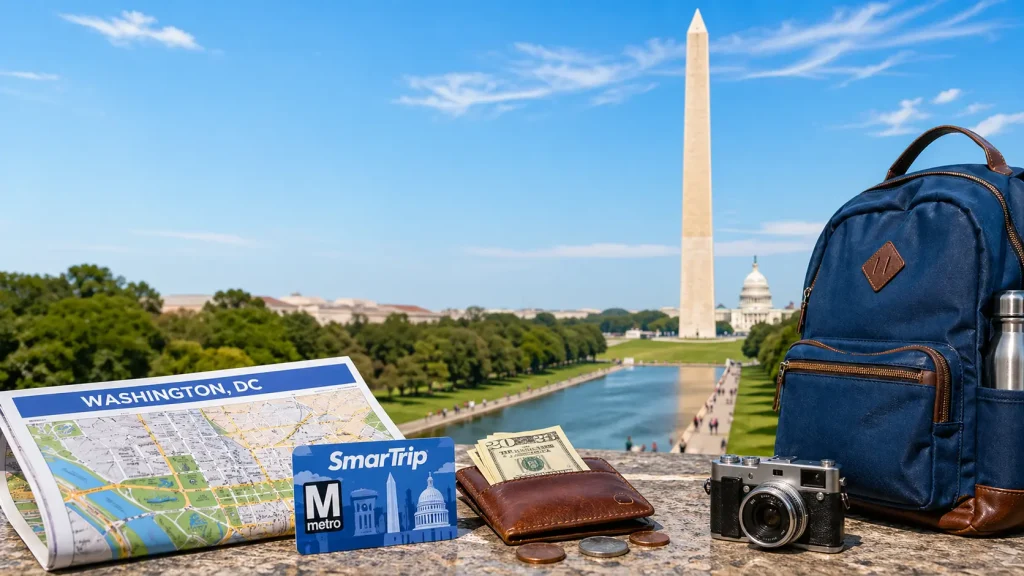
Why? Because many of the city’s best experiences are free. You can walk the National Mall, visit world-class Smithsonian museums, see famous monuments, explore memorials, and spend full days sightseeing without buying expensive attraction tickets. Smithsonian confirms that admission is free at all Smithsonian museums except Cooper Hewitt in New York City.
So if you plan smart, budget travel in Washington, D.C. is not just possible. It can actually feel easier than cities where every major attraction charges an entry fee.
Washington DC is a great example of how travelers can experience an expensive US city without a large budget. For more ideas covering New York, San Francisco, Boston, Seattle, and other destinations, read our complete guide to budget travel tips for expensive cities in the USA.
Quick Answer: Can You Visit Washington, D.C. on a Budget?
Yes, you can visit Washington, D.C. on a budget by focusing on free Smithsonian museums, walking the National Mall, using Metro instead of renting a car, staying near public transportation, and choosing casual food spots outside the most tourist-heavy areas.
D.C. is one of the best expensive U.S. cities for budget travelers because many of its top attractions are free or low-cost.
Is Washington, D.C. Good for Budget Travelers?
Yes, Washington, D.C. is a strong city for budget travelers, especially if you care about museums, history, monuments, walking routes, and public transportation.
The city gives you a rare mix of free attractions and big-city energy. You do not need to spend a lot every day just to stay entertained. A first-time visitor can build a full itinerary around free museums, memorials, neighborhood walks, public spaces, and affordable food stops.
That is what makes D.C. different from many expensive U.S. destinations.
Why D.C. Is Cheaper Than It Looks
The biggest budget advantage is simple: the main sights do not all require paid tickets.
You can spend one morning at the Lincoln Memorial, the Washington Monument area, the World War II Memorial, and the Reflecting Pool without paying admission. Then you can walk into a Smithsonian museum and spend the afternoon indoors for free.
Official Washington, D.C. tourism also highlights free monuments, memorials, and museums around the National Mall as some of the best free things to do in the city.
That means your daily activity cost can stay very low if you plan around the right places.
Where Your Money Usually Goes
Washington, D.C., gets expensive in a few areas.
Hotels near the National Mall can be pricey. Parking can be expensive. Eating every meal in tourist-heavy zones adds up. Rideshares can also become a problem if you stay far from Metro access.
So the trick is not only finding free things to do. It also avoids the hidden costs that quietly drain your budget.
For most travelers, the smartest move is to spend less on transport and activities, then use that saved money on a better hotel location or a few good meals.
Free Museums in Washington, D.C. That Saves You Serious Money
Free museums are the heart of budget travel in Washington, D.C.
In many cities, museums can become one of the biggest trip expenses. In D.C., you can visit some of the country’s most famous museums without paying regular admission.
Start With the Smithsonian Museums
The Smithsonian museums are the biggest win for budget travelers. They cover history, science, aviation, culture, art, nature, and more.
Some strong picks for first-time visitors include:
- National Museum of Natural History
- National Air and Space Museum
- National Museum of American History
- National Museum of African American History and Culture
- Hirshhorn Museum and Sculpture Garden
- National Museum of the American Indian
- Smithsonian American Art Museum
- National Portrait Gallery
You do not need to visit all of them. In fact, trying to do that will probably ruin your day. Pick the museums that match your interests and give each one enough time.
Best Free Museums for First-Time Visitors
For a first D.C. trip, the National Museum of Natural History is one of the easiest choices. It works well for families, students, and casual visitors because the exhibits are visual and easy to enjoy, even if you are not usually a museum person.
The National Air and Space Museum is another popular stop, especially for aviation, space, and science fans. Just remember that some popular free attractions may still require timed-entry passes. The National Air and Space Museum’s D.C. location currently requires free timed-entry passes for all visitors.
The National Museum of American History is a good pick if you want a broad look at U.S. culture, politics, inventions, and everyday life.
For art lovers, the National Gallery of Art and Hirshhorn Museum can give you a slower, calmer museum day without spending money on tickets.
Don’t Try to See Every Museum in One Day
This is one of the biggest mistakes budget travelers make in D.C.
Because so many museums are free, it is tempting to pack five into one day. On paper, that sounds efficient. In real life, it gets tiring fast.
A better plan is simple: choose one major museum in the morning, take a break for lunch, then visit one more museum or a monument area in the afternoon. Save the evening for a walk, a cheap dinner, or nighttime monument views.
Free does not mean you have to rush. The real value is being able to slow down without feeling like you wasted a paid ticket.
For more museum-focused planning, you can also read Best Free Museums in Washington, D.C. for Budget Travelers.
Free Things to Do in Washington, D.C. Beyond Museums
Museums are only one part of a low-cost D.C. trip. The city’s outdoor attractions are just as important.
Walk the National Mall Without Paying for Attractions
The National Mall is one of the best free sightseeing areas in the U.S.
You can see:
- Lincoln Memorial
- Washington Monument
- World War II Memorial
- Vietnam Veterans Memorial
- Korean War Veterans Memorial
- Martin Luther King Jr. Memorial
- U.S. Capitol views
- Reflecting Pool
- Smithsonian museum buildings
This is where D.C. gives budget travelers serious value. You can spend hours walking, taking photos, reading memorial inscriptions, resting on benches, and soaking in the city without paying an entry fee.
Visit Monuments at Night
If your schedule allows it, visit some monuments at night.
The Lincoln Memorial, the Washington Monument area, and the Reflecting Pool feel different after sunset. The crowds are often lighter, the lighting is better for photos, and the summer heat is less intense.
This is also a smart budget move because it gives you a memorable evening activity without paying for nightlife, tours, or expensive entertainment.
Explore Free Neighborhood Walks
Not every budget-friendly experience has to be around the National Mall.
You can also explore:
- Georgetown Waterfront
- Capitol Hill streets
- The Wharf area
- Dupont Circle
- Adams Morgan
- U Street
- Union Market area
- Rock Creek Park
Some of these places can get expensive if you sit down for a full meal or shop heavily, but walking around, grabbing a snack, or enjoying the atmosphere can still fit a budget trip.
How to Save Money on Transportation in Washington, D.C.
Transportation can either save your trip budget or destroy it. In D.C., public transit and walking are usually your best friends.
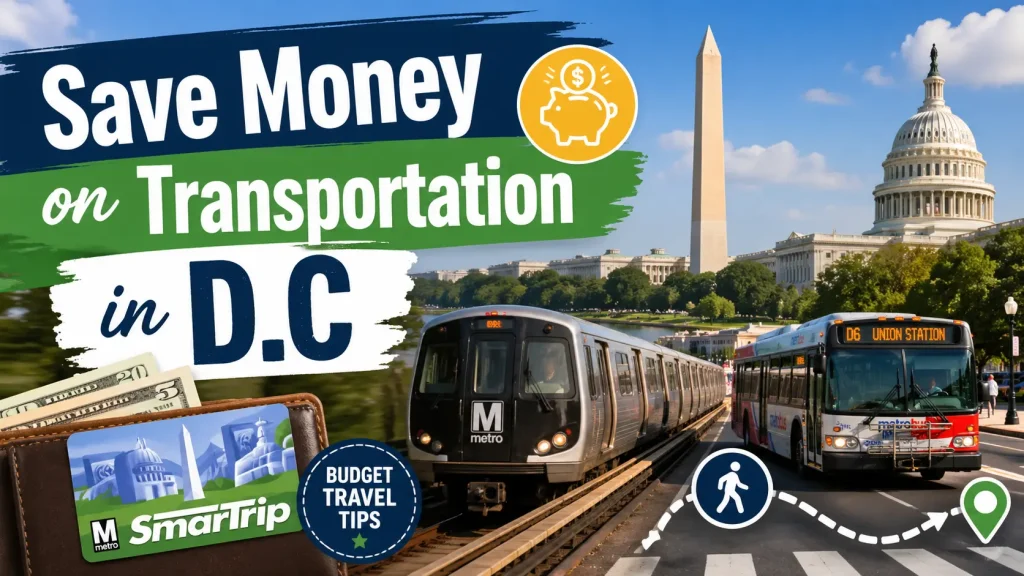
Use Metro Instead of Renting a Car
For most visitors, renting a car in Washington, D.C. is not worth it.
Parking can be expensive. Traffic can be annoying. Many major attractions are easier to reach by Metro, bus, or walking.
If your hotel is near a Metro station, you can usually move around the city without needing a car. This is especially useful for first-time visitors staying in areas like Arlington, Crystal City, NoMa, Dupont Circle, Navy Yard, or Alexandria.
For more city transit tips, read Public Transportation in Expensive U.S. Cities.
Understand Metro Fares Before You Go
D.C. Metro fares are not always one flat price. WMATA lists current fare and pass information on its official fare pages, so it is worth checking before your trip instead of guessing.
For updated transit prices, check the official WMATA fares and passes page before your trip, especially if you plan to use Metro trains and buses for most of your Washington, D.C. sightseeing.
When a Metro Pass Makes Sense
A Metro pass can make sense if you plan to ride several times per day.
As of the current WMATA fare page, Metrorail and Metrobus unlimited pass options include a 1-Day Unlimited Pass for $13.50, a 3-Day Unlimited Pass for $33.75, and a 7-Day Unlimited Pass for $60.75.
But do the math before buying one.
If your hotel is walkable to the National Mall and you only take one or two rides daily, a pass may not save much. If you are staying outside the center and using the Metro morning, afternoon, and evening, it could be worth considering.
Walk More Than You Think
D.C. is very walkable around the National Mall, but distances can feel longer than they look on a map.
Wear comfortable shoes. Carry water. Plan breaks.
Walking can save money, but only if you pace yourself. A cheap trip is not worth much if you are exhausted by 2 p.m.
Cheap Eats in Washington, D.C. Without Eating Boring Food
Food is where many D.C. budgets go sideways.
You start with a coffee. Then a quick lunch near the museums. Then dinner in a busy area. By the end of the day, you realize food costs almost as much as your hotel.
The fix is not to eat badly. The fix is to choose better-value food areas and avoid tourist pricing when possible.
Avoid Eating Every Meal Near the National Mall
The National Mall is amazing for sightseeing, but it is not always the best place for budget meals.
Food trucks can be convenient, but prices and quality can vary. Museum cafes are easy, but they may not be the cheapest option for every meal.
A smarter plan is to keep snacks with you, eat simply during the day, then head to a neighborhood with more affordable choices for dinner.
Look for Food Trucks, Fast-Casual Spots, and Local Markets
Washington, D.C., has plenty of budget-friendly food if you know where to look.
Good options often include food trucks, falafel spots, shawarma shops, pizza slices, sandwich counters, tacos, casual Asian food, bakeries, fast-casual bowls, and local markets.
Union Market is useful if you want different casual food options in one area. Prices vary, but it gives you more flexibility than sitting down at a full-service restaurant.
Adams Morgan can work well for cheaper global food, late-night casual meals, pizza, tacos, and quick bites.
U Street is good for casual eats, music-area energy, and food options that feel more local than touristy.
Dupont Circle can be useful for lunch, coffee, bakeries, and quick meals if you are staying nearby.
Chinatown/Penn Quarter is convenient for fast-casual meals, especially if you are moving between museums, downtown, and evening activities.
The goal is not to hunt for the absolute cheapest meal every time. The goal is to avoid paying high prices just because you are hungry in the wrong location.
Use a Simple Breakfast and Lunch Strategy
One easy way to save money is to avoid paying for three full restaurant meals every day.
Keep breakfast simple. Grab coffee, fruit, yogurt, pastries, or something quick near your hotel. For lunch, choose casual food instead of a full sit-down meal. Save your bigger spend for dinner if you want a nicer meal.
This keeps the day flexible and stops your food budget from disappearing before evening.
Carry Snacks for Museum Days
Museum days can run long. If you wait until you are starving, you are more likely to buy the nearest expensive option.
Pack small snacks like granola bars, nuts, crackers, or fruit. You do not need to turn the trip into survival mode, but having something in your bag saves money and keeps your energy steady.
Where to Stay in Washington, D.C. on a Budget
Accommodation is usually the hardest part of budget travel in Washington, D.C.
Free museums help, but hotels can still be expensive depending on season, events, location, and booking timing.
For more hotel-saving ideas, read Cheap Hotels in Expensive U.S. Cities.
Stay Near Metro, Not Necessarily Next to the National Mall
You do not have to stay beside the National Mall to have a good trip.
A hotel near a Metro station can be a better deal than a central hotel with a high nightly rate. The key is checking the real door-to-door travel time, not just the distance on a map.
A cheaper hotel is not a good deal if you spend too much time and money getting into the city every day.
Budget-Friendly Areas to Consider
Depending on prices, these areas may be worth checking:
- Arlington
- Crystal City
- Alexandria
- NoMa
- Navy Yard
- Dupont Circle
- Columbia Heights
- Rosslyn
- Silver Spring
Arlington and Crystal City can be useful because they often have Metro access and airport convenience. NoMa and Navy Yard may work well if prices are fair. Dupont Circle can be great for walkability, but rates vary.
Watch for Hidden Hotel Costs
Before booking, check:
- Parking fees
- Resort or destination fees
- Breakfast cost
- Distance to Metro
- Cancellation policy
- Taxes and total price
- Weekend vs weekday rates
- Event dates
- Room size for families
A hotel that looks cheap in search results may not be cheap after fees.
When Staying Outside D.C. Makes Sense
Staying outside D.C. can save money if the hotel is close to the Metro.
But do not book only because the nightly rate looks lower. Check how long it takes to reach the places you want to visit. If you need rideshares every day, the savings may disappear.
Best Budget Itinerary for Washington, D.C.
A budget itinerary should reduce backtracking. Group attractions by area so you save time, energy, and transit costs.
One-Day Budget Washington, D.C. Plan
Start early at the National Mall. Visit the Lincoln Memorial, Reflecting Pool, World War II Memorial, and Washington Monument area.
Then choose one Smithsonian museum for the afternoon. Do not try to visit three museums in a rush.
For dinner, leave the tourist-heavy zone and choose a casual neighborhood meal. End the day with a nighttime monument walk if you still have energy.
Two-Day Budget Washington, D.C. Plan
Day 1: Focus on the National Mall, monuments, and one or two Smithsonian museums.
Day 2: Visit Capitol Hill, the Library of Congress area, a museum you missed, and a neighborhood like Georgetown, Dupont Circle, or Union Market.
This gives you a better mix of classic sightseeing and local flavor without needing expensive tours.
Three-Day Budget Washington, D.C. Plan
In three days, you can slow down.
Use one day for the National Mall and monuments. Use one day for museums. Use the third day for neighborhoods, Arlington, a waterfront walk, or extra museums based on your interests.
This is usually the sweet spot for first-time budget travelers planning an affordable Washington D.C. trip.
Smart Savings Tips for Washington, D.C. Travelers
Budget travel is not only about finding cheap things. It is about making fewer expensive mistakes.

Visit During a Cheaper Season
Hotel prices can rise during cherry blossom season, school trips, holidays, conferences, and major events.
If your dates are flexible, compare different weeks before booking. Sometimes shifting your trip by a few days can make a big difference.
Book Hotels Early for Busy Dates
D.C. gets many visitors for political events, festivals, conferences, school groups, and seasonal tourism.
If you wait too long, budget-friendly rooms near Metro stations may disappear. Book early when possible, especially if your trip falls during spring or a major event period.
Use Free Attractions First
Build your trip around free museums, monuments, memorials, parks, and walking routes first.
Then add paid experiences only if they truly improve your trip. You may decide that one paid tour is worth it, but you probably do not need paid attractions every day.
Check Timed Entry Rules
Free does not always mean you can just walk in anytime.
Some popular places may require free timed-entry passes or planning. Smithsonian visitor guidelines say some locations require free passes or tickets, including the National Museum of African American History and Culture, the Air and Space Museum in D.C., and the National Zoo.
Always check official pages before your visit.
Don’t Overpay for Short Rides
Before booking a rideshare, check the walking time and Metro option.
Sometimes a ride looks convenient, but it only saves a few minutes. If the weather is good and the walk is safe, walking may be the better choice.
Common Budget Travel Mistakes to Avoid in Washington, D.C.
D.C. is budget-friendly if you plan well. But a few mistakes can make it feel expensive fast.
Booking a Cheap Hotel Far From Transit
This is the classic mistake.
A hotel that saves a little per night may cost you more in rideshares, wasted time, and frustration. Always check transit access before booking.
Trying to Visit Too Many Museums in One Day
Free museums make people over-plan.
Two museums in one day can be enough. Three may be possible if you move fast, but it can feel rushed. Choose quality over quantity.
Forgetting Timed Entry Requirements
Some free attractions still require planning. Check official museum and attraction pages before your visit so you do not waste time at the entrance.
Renting a Car Without Checking Parking Costs
A rental car may sound convenient, but parking in D.C. can be expensive and stressful.
Unless you are planning day trips outside the city, most budget travelers are better off using Metro, buses, walking, and occasional rideshares.
Eating Only in Tourist Zones
If every meal happens near the National Mall or major attractions, your food budget can climb quickly.
Move a little farther out for better value and more interesting food.
How Much Money Do You Need for Budget Travel in Washington, D.C.?
Your Washington DC travel costs depend heavily on where you stay, when you visit, and how you eat.
A low-budget traveler can often plan around $60–$100 per day before hotel costs by using Metro, walking often, eating casual meals, carrying snacks, and focusing mostly on free attractions.
A mid-budget traveler may spend closer to $120–$200 per day before hotel costs if they choose better meals, more rideshares, paid tours, or extra convenience.
Hotel prices are the biggest variable. A room near a Metro station can be a smart deal, but rates change a lot based on season, events, location, and booking timing.
Families should also think about room size, breakfast, snacks, transit costs, and how much walking younger kids can handle.
The big thing: do not guess your total budget based only on flight and hotel prices. Add food, airport transfers, Metro rides, snacks, parking if needed, attraction extras, and taxes. That gives you a more honest number.
Best External Resources for Planning a Budget D.C. Trip
For a budget travel post, external links should build trust. Use official sources where possible.
The best ones to include are:
Smithsonian Museums and Zoo
Use this for museum hours, locations, and free admission details. Smithsonian confirms free admission at all Smithsonian museums except Cooper Hewitt in New York City.
WMATA Fares and Passes
Use this in your transportation section so readers can check current Metro and bus costs before traveling. WMATA provides official fare and pass details, including unlimited pass options.
Washington.org Free Things to Do
Use this for free attraction ideas, museums, monuments, memorials, and budget-friendly trip planning around the city.
These links are better than random travel blogs because they help readers verify important details before they go.
Final Thoughts: Is Budget Travel in Washington, D.C. Worth It?
Yes, Washington, D.C., is absolutely worth it for budget travelers.
It is one of the few expensive U.S. cities where you can fill your days with major attractions and still keep activity costs low. Free museums, famous monuments, walkable sightseeing routes, Metro access, and affordable food choices make the city easier to manage than it first appears.
The key is planning around free experiences, staying near transit, avoiding parking costs, and being smart with food.
Washington, D.C., proves that an expensive city does not have to become an expensive trip.
For more city-saving ideas, read our full guide to Budget Travel Tips for Expensive Cities USA. You can also compare this trip with our guide to Budget Travel in Chicago if you are planning more than one city.
FAQs About Budget Travel in Washington, D.C.
Can you visit Washington, D.C. on a budget?
Yes. Washington, D.C. is one of the better expensive U.S. cities for budget travelers because many major museums, monuments, memorials, and public spaces are free.
Are Smithsonian museums free in Washington, D.C.?
Yes. Smithsonian states that admission is free at all Smithsonian museums except Cooper Hewitt in New York City.
What is the cheapest way to get around Washington, D.C.?
For most visitors, the cheapest way is a mix of Metro, buses, and walking. Check WMATA fare details before your trip because pass prices and ride costs can change.
How many days do you need in Washington, D.C., on a budget?
Two to three days is a good amount for first-time visitors. You can see major monuments, visit a few free museums, explore neighborhoods, and avoid rushing too much.
Where should budget travelers stay in Washington, D.C.?
Budget travelers should usually stay near a Metro station. The hotel does not have to be right next to the National Mall if transit access is easy and the total price is better.
What are the best free things to do in Washington, D.C.?
Some of the best free things include walking the National Mall, visiting Smithsonian museums, seeing the Lincoln Memorial, exploring memorials, visiting free galleries, and walking through neighborhoods like Georgetown or Capitol Hill.
Is it worth buying a Metro pass in Washington, D.C.?
It depends on how often you ride. WMATA currently lists 1-day, 3-day, and 7-day unlimited pass options, but you should compare the pass price with your expected number of rides before buying.

Silas Harlow
Silas Harlow is a travel writer and budget travel researcher at TravelBee Trips. He creates practical guides covering destinations, accommodation, transportation, attractions, safety, and affordable travel planning. His research uses official tourism resources, government websites, maps, and established service providers where available. Because travel information changes frequently, readers should verify important details before booking. View his complete author profile and editorial approach.