New York may be famous for New York City, but some of the state’s best experiences are far away from busy streets and tall buildings.
Travel a little farther, and you can walk through deep gorges, stand beside huge waterfalls, swim at sandy beaches, camp under the stars, and hike through quiet forests.
That is what makes New York State Parks so interesting. One park may be perfect for a family picnic, while another may be better for a full weekend of hiking and camping.
If you are planning your first visit, though, it is easy to have questions. Which parks should you visit? How much does entry cost? Is the Empire Pass worth buying? Can you get a pass from a library? Which parks are best for waterfalls, hiking, or children?
This New York State Parks Guide answers those questions in simple language.
Think of it as a practical New York parks guide that helps you choose a park, understand the costs, and know what to check before you leave home.
If saving money is already on your mind, you can also read our State Park Pass Library New York guide to learn how some local library programs may help visitors get park access for less.
New York State Parks: Quick Guide
Here are the most important things to know before getting into the full guide.
| Question | Quick Answer |
|---|---|
| How many New York State Parks are there? | The official State Parks website says New York has 180 state parks. |
| What does park entry usually cost? | Most parks that collect a day-use vehicle fee charge about $6–$10. |
| Is there an annual park pass? | Yes. The Empire Pass covers day-use vehicle entry at most participating facilities. |
| Best parks for waterfalls | Letchworth, Watkins Glen and Taughannock Falls are good places to start. |
| Best parks near NYC | Bear Mountain, Harriman and Minnewaska are popular options. |
| Can you camp in state parks? | Yes. Many parks offer campsites, and some also have cabins or other lodging. |
| Are there beaches? | Yes. New York State Parks include ocean beaches, lake beaches and swimming areas. |
| Best time to visit | It depends on the activity, although summer and fall are especially popular. |
New York’s official park website currently describes a system of 180 state parks spread from Long Island to Niagara Falls.
Quick navigation: New York State Parks at a Glance · Best Parks · Parks Near NYC · Entrance Fees · Empire Pass · Other Admission Programs · Library Passes · Hiking · Camping · Family Parks · Waterfalls · Beaches · Scenic Parks · Park Map · Best Time to Visit · Rules · FAQs
New York State Parks at a Glance
New York is a large state, so the park experience changes a lot depending on where you go.
Some parks have mountains and cliffs. Others have beaches, lakes, waterfalls, or quiet woodland trails.
That variety is one of the best reasons to explore more than one park.
What Is a New York State Park?
A state park is a protected public area managed for recreation, nature, history, or a mix of these purposes.
Depending on the location, visitors may find hiking trails, picnic areas, beaches, campgrounds, playgrounds, fishing areas, boat launches, nature centers, and scenic overlooks.
Some parks are built around one famous natural feature. Niagara Falls State Park is an obvious example.
Others are large enough to offer many different activities in one trip.
You can explore parks by location and amenities with the official New York State Parks finder.
How Many New York State Parks Are There?
New York’s official State Parks website says the state has 180 state parks.
They stretch across regions such as Long Island, the Finger Lakes, Niagara, the Palisades, Central New York, and the Capital Region.
Because these areas have very different landscapes, the words “New York State Parks” can mean everything from an Atlantic Ocean beach to a waterfall-filled gorge.
State Parks Are Not the Same as Every Public Land in New York
This is worth understanding before you plan a trip.
Not every forest, mountain, or public recreation area in New York belongs to the State Parks system.
The New York State Department of Environmental Conservation, usually called DEC, also manages large areas of public land.
This is especially important in the Adirondacks and Catskills.
So, if you find a hiking trail, campground, or lake online, first check which agency manages it. Reservation systems, fees, and rules may be different.
What Can You Do in NY State Parks?
The answer depends on the park and the season.
Hiking is common, but visitors may also find camping, swimming, fishing, boating, cycling, picnicking, wildlife watching, and winter recreation.
Some parks are easy places to spend two or three hours. Others can keep you busy for an entire weekend.
The best approach is to decide what kind of day you want before choosing the park.
Which New York State Parks Are Worth Visiting?
There is no single park that is best for everyone.
A waterfall lover and a beach lover will probably choose completely different places.
Still, a few famous parks give first-time visitors a good idea of how varied New York can be.
Letchworth State Park
Letchworth is known for a deep gorge, the Genesee River, and major waterfalls.
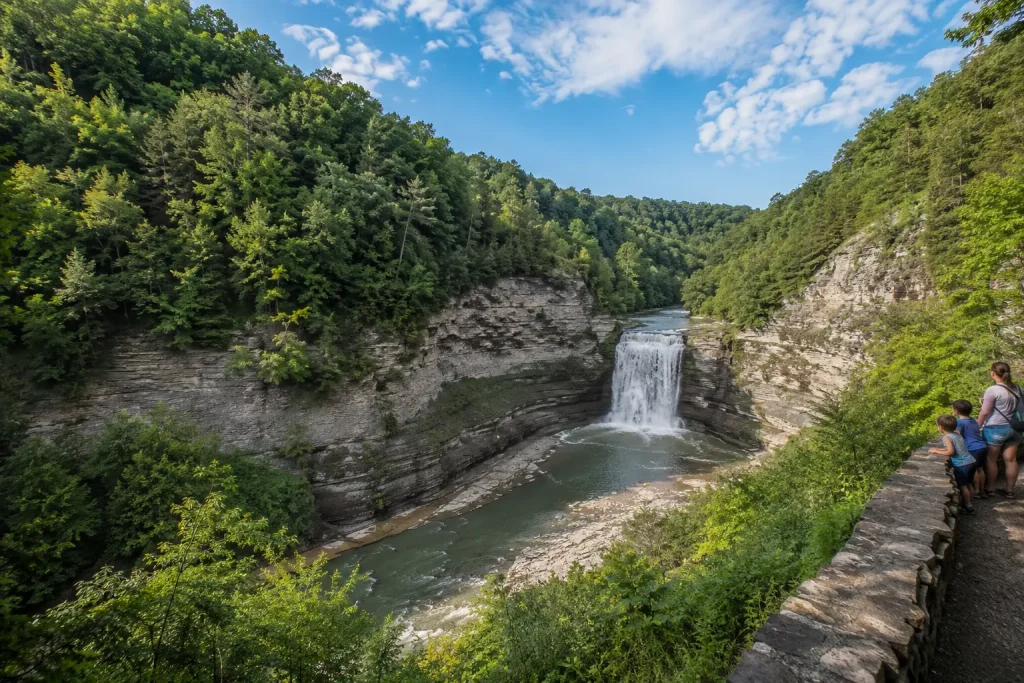
There are scenic overlooks and hiking trails, but you do not need to complete a long hike to enjoy the landscape.
That makes Letchworth useful for both active travelers and visitors who mostly want views, photographs, and a relaxed day outdoors.
Watkins Glen State Park
Watkins Glen offers a much closer gorge experience.
Its famous trail winds past rock walls, stone steps, and waterfalls.
It is a good choice for people who want a walk where the trail itself feels like the main attraction.
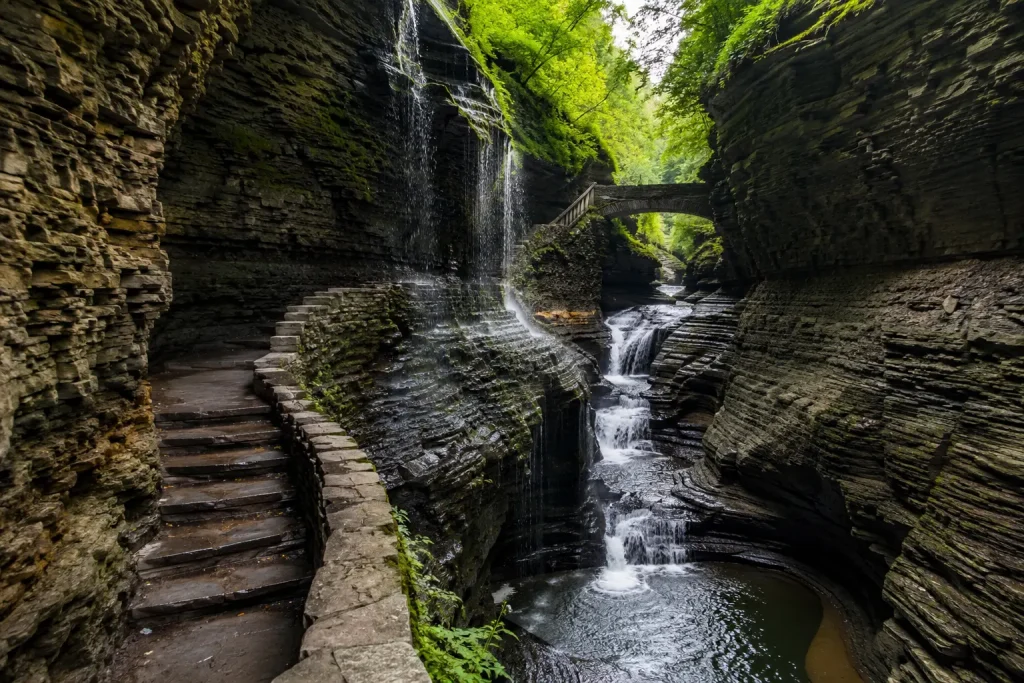
However, the Gorge Trail is seasonal, so check its status before making a long trip.
Niagara Falls State Park
Niagara Falls is one of the easiest parks to recommend to a first-time visitor because the main attraction needs little introduction.
You can enjoy major waterfall views without planning a long backcountry hike.
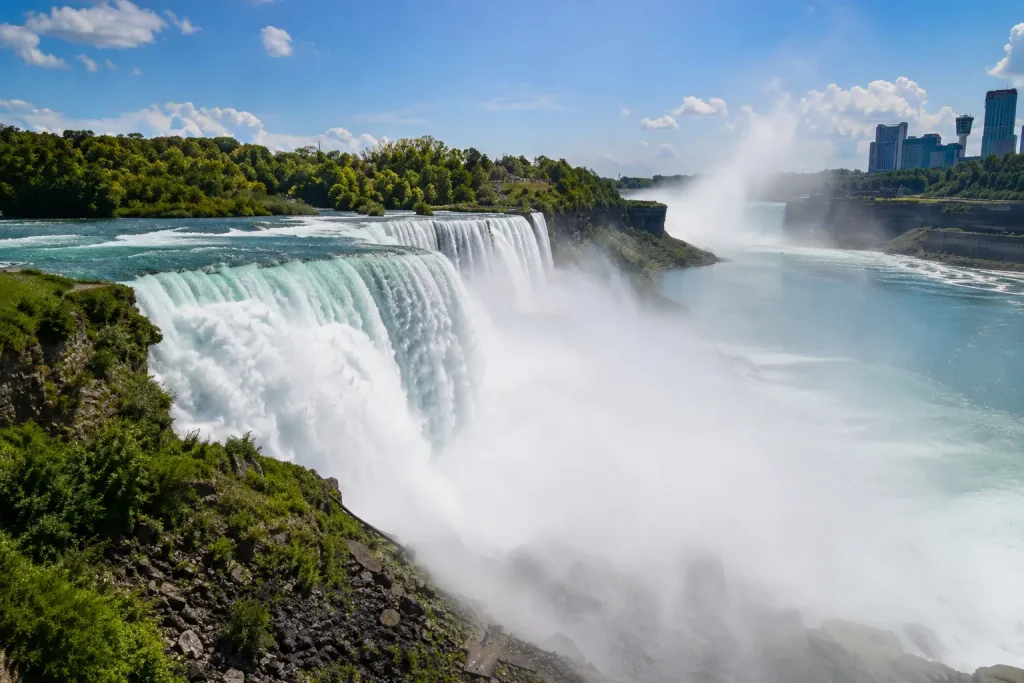
It is especially useful for families, sightseeing trips, and travelers who want to combine nature with other nearby attractions.
Minnewaska State Park Preserve
Minnewaska is a strong choice for hiking and wide-open scenery.
Visitors come for lakes, cliffs, waterfalls, carriage roads, and overlooks.
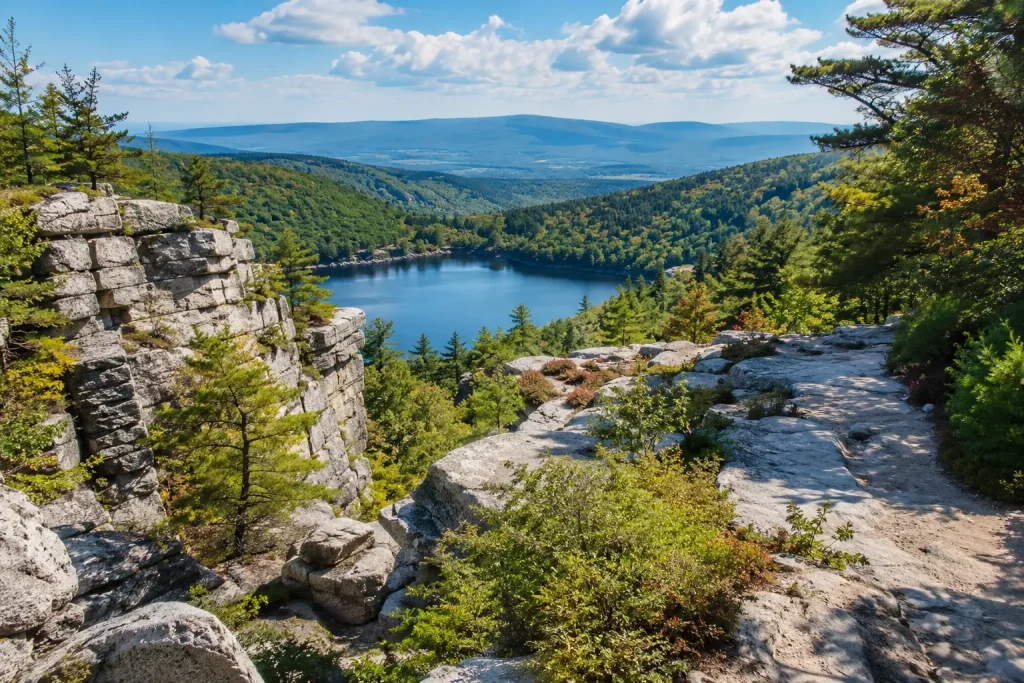
It can become very busy on good-weather weekends, so getting there early can make the day much easier.
Bear Mountain State Park
Bear Mountain is popular with travelers coming from the New York City area.
Its location makes it useful for a day trip when you want Hudson River scenery, hiking, picnicking, and outdoor time without traveling across the whole state.
Jones Beach State Park
Jones Beach shows a completely different side of the park system.
Instead of mountains and gorges, it offers Atlantic Ocean shoreline and a classic summer beach experience.
It is a good reminder that the Beautiful New York State Parks depend on the type of trip you actually want.
For a larger comparison of destinations across the state, continue to our best New York State Parks guide.
Best New York State Parks Near NYC
You do not have to plan a long road trip to enjoy nature outside New York City.
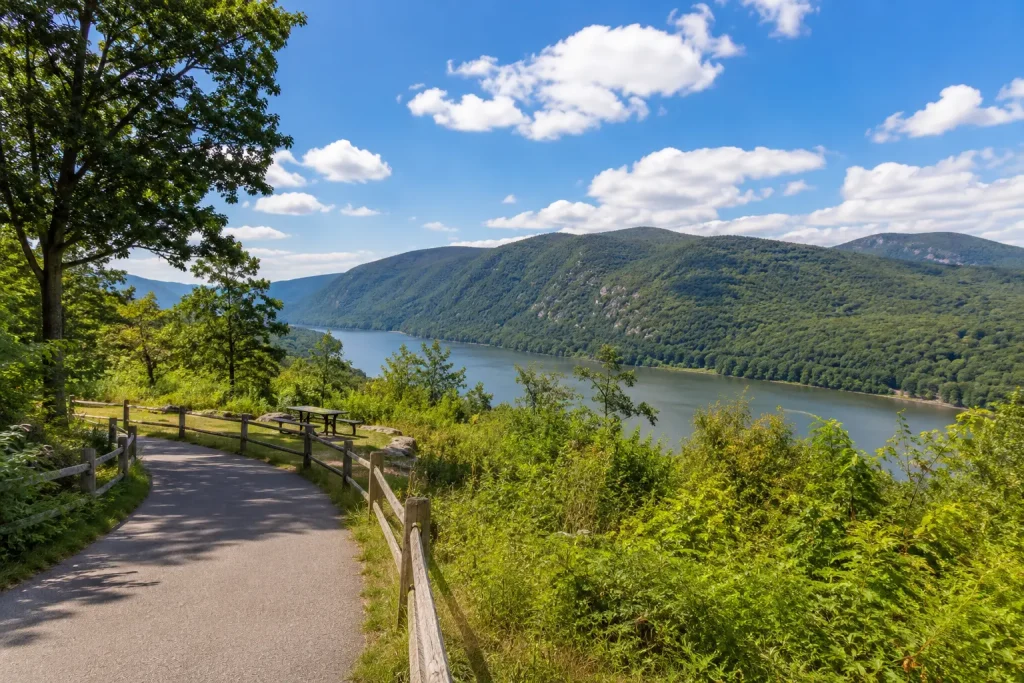
Bear Mountain is one of the most popular choices for a simple outdoor day. Harriman is a good option when hiking matters more than developed attractions.
Minnewaska is farther away, but its lakes and cliffs can make the extra drive worthwhile.
Meanwhile, Jones Beach works well when your idea of an outdoor escape involves sand and ocean water instead of hiking boots.
| Park | Best For | Trip Style |
| Bear Mountain | Views, walks and picnics | Easy day trip |
| Harriman | Hiking and forests | Active outdoor day |
| Minnewaska | Hiking and scenery | Full-day trip |
| Jones Beach | Beach and swimming | Summer day |
Traffic can change travel times a lot, especially on weekends.
Parking at popular parks can also fill up earlier than new visitors expect.
For a deeper comparison of distance, activities, and trip styles, read our best New York State Parks Near NYC guide.
How Much Does It Cost to Visit New York State Parks?
There is no single entrance price for every state park. The cost of a New York State Park Pass can vary depending on the type of pass and how often you plan to visit. For a detailed breakdown of current prices and options, see our New York State Park Pass cost guide.
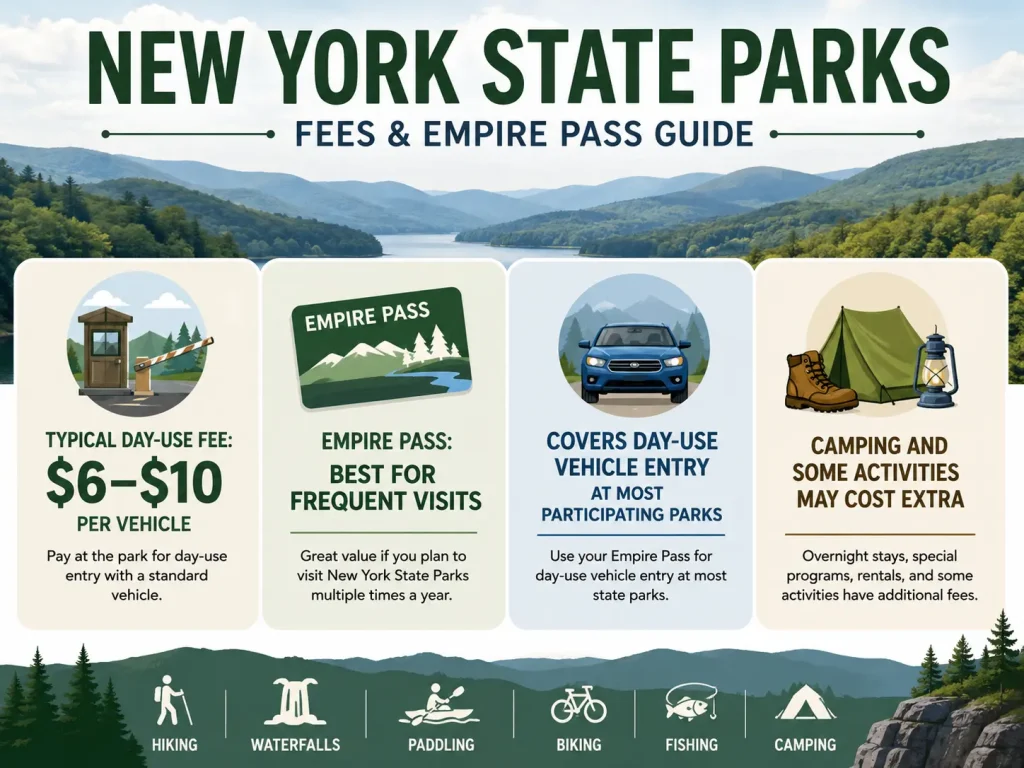
Some places charge a vehicle-use fee. Others may charge fees only during certain seasons or hours.
Extra activities can also have their own prices.
Typical New York State Park Entrance Fees
According to the current New York State Parks admission information, most parks that charge a day-use vehicle fee collect around $6 to $10 per vehicle. Extra charges may apply for amenities such as pools or picnic shelters.
That means a simple park day can be quite affordable, especially when several people travel in one vehicle.
However, do not assume the fee is always the same.
The park, date, season, and activity can all affect the final cost.
For current admission programs and general fee information, check the official New York State Parks admission page.
What Can Cost Extra?
A day-use vehicle fee usually does not include every possible activity.
For example, camping, special attractions, cabins, equipment rentals, pools, golf, or shelter reservations may have separate charges.
So, if you are planning more than a simple walk or picnic, check the cost of each activity before you leave.
Can You Visit Some Parks for Free?
Yes, depending on the park, the date, and how you arrive.
Some locations may not collect a vehicle fee at certain times.
New York also has several admission programs that can make park visits free or cheaper for eligible visitors.
If your main goal is a low-cost trip, our free New York State Parks guide will cover more ways to explore without spending much.
New York Empire Pass: Is It Worth Buying?
If you expect to visit state parks often, paying a vehicle fee every time may eventually cost more than buying a pass.
That is where the Empire Pass becomes useful.
What Is the Empire Pass?
The Empire Pass provides unlimited day-use vehicle entry at most participating New York State Parks and DEC recreation facilities.
For the 2026 season, the standard physical annual Empire Pass is listed at $80, while a digital annual version is listed at $72.
Because prices and pass options can change, always check the current details before buying.
You can see current options on the official Empire Pass page.
What Does the Empire Pass Cover?
Its main purpose is to cover the normal day-use vehicle entrance fee at participating facilities.
That can be helpful for families who take many park trips, people who live near a state park, or travelers planning several park visits during one season.
What Does It Not Cover?
The Empire Pass should not be treated like an all-inclusive vacation pass.
Camping, overnight stays, some special attractions, and other activity fees may still cost extra.
So, before buying the pass, think about how often you expect to pay normal vehicle entrance fees.
Someone visiting parks many times may save money.
Someone making only one or two trips may be better off paying individual fees.
Our full New York Empire Pass guide will help you compare the options and decide whether the pass makes sense for your plans.
Other Ways to Save on New York State Park Admission
The Empire Pass is not the only official admission program.
New York State Parks also lists programs for older residents, fourth graders, eligible residents with disabilities, veterans, and Gold Star family members.
Golden Park Program
New York State residents age 62 or older can receive free vehicle access to most participating state parks on non-holiday weekdays.
A current New York State driver’s license or non-driver ID is normally used to prove eligibility.
This can be especially useful for people who are able to plan weekday visits rather than busy weekend trips.
Every Kid Outdoors
New York State Parks accepts the federal Every Kid Outdoors pass for qualifying fourth-grade students.
For families with a child in fourth grade, it is worth checking the current program rules before paying for admission.
Access Pass
The Access Pass is available to qualifying New York State residents with disabilities.
It can provide free or discounted use of eligible parks, historic sites, and recreation facilities.
Eligibility requirements apply, so visitors should check the official program information rather than assuming every disability or facility is covered.
Lifetime Liberty Pass
The Lifetime Liberty Pass is designed for qualifying New York veterans and certain Gold Star family members.
Benefits can include free vehicle entry at many state-operated locations and discounts on some other recreation services.
Because every admission program has its own eligibility rules and exceptions, check the official New York State Parks admission page before planning around a specific benefit.
Can You Get a New York State Park Pass Through a Library?
Before buying your own park pass, check your local library.
Some library systems may lend outdoor passes or offer programs that help cardholders visit parks.
However, library programs are local.
A pass offered by one library may not be available at another, and reservation or borrowing rules can be completely different.
That is why the best first step is to check your own library’s website or contact the library directly.
If passes are available, they may be popular during summer weekends and fall foliage season.
Want to see how the process works? Our State Park Pass Library New York guide explains how to check whether your library offers an Empire Pass, how borrowing usually works, and what to know before planning your park trip.
Hiking in New York State Parks
Hiking is one of the easiest ways to enjoy a state park.
Some trails are short, smooth, and family-friendly. Others include steep climbs, rocky ground, long distances, or many stairs.
A beautiful trail is only a good trail if it matches your ability.
Easy Walks and Harder Trails
If you are new to hiking, start small.
A short nature trail or scenic overlook can still give you a great park experience.
More experienced hikers may want longer routes at places such as Minnewaska, Harriman or Letchworth.
Gorge trails can be different again.
They may include stairs, narrow paths, wet rocks, and seasonal closures.
Check the Trail Before You Go
Look at the trail length, difficulty, elevation, and current conditions before leaving the parking area.
Weather can also change a trail quickly.
Rain may make rocks slippery. Cold weather can create ice. Storm damage can close part of a route.
For a full comparison of easier walks, scenic routes, and more challenging hikes, see our guide to the best hiking trails in New York State Parks.
Camping in New York State Parks
Camping lets you experience a park after most day visitors have gone home.
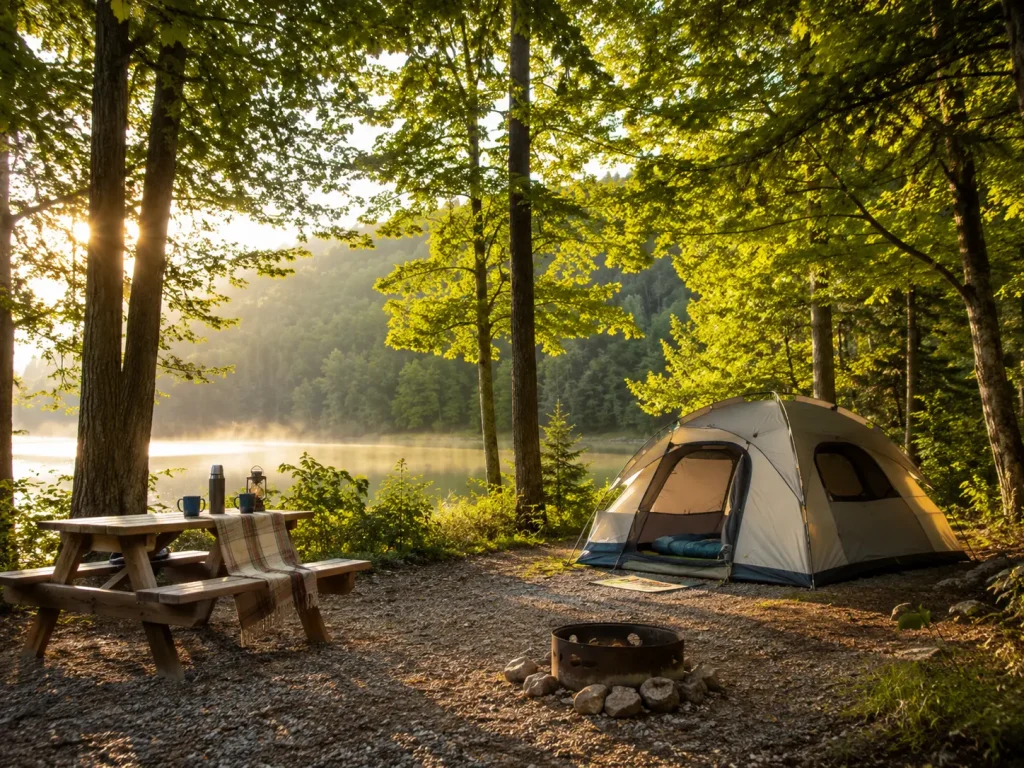
New York State Parks offers thousands of campsites and trailer sites, along with many cabins, cottages, and other overnight choices.
What Kind of Camping Can You Find?
The exact choices depend on the campground.
Some places focus on tent and RV camping. Others may also offer cabins, cottages, or specialty lodging.
Facilities can vary too.
A campground may have showers and electric sites, while another may offer a more basic outdoor stay.
Always check what is included before reserving.
How Early Should You Book?
New York State Parks currently allows many camping reservations to be made up to nine months ahead.
For campsites, same-day reservations may also be available until 3 p.m. on the day of arrival, subject to availability.
Popular summer and fall weekends can fill much earlier.
For current booking information, use the official New York State Parks camping reservation service.
For a deeper look at campsites, cabins, booking tips, and campground choices, read our New York State Parks camping guide.
Best New York State Parks for Families
A good family park does not need the longest trail or the tallest waterfall.
Often, simple things make the biggest difference.
Easy parking, short walks, restrooms, picnic tables, playgrounds, and safe places for children to explore can turn a stressful outing into a good one.
Before choosing a park, think about the age of your children.
A six-year-old may enjoy a short waterfall walk and picnic much more than a long mountain hike.
Older children may be ready for longer trails, swimming, nature programs, or camping.
Families looking for kid-friendly outdoor adventures can explore our guide to the best family parks in New York for beaches, hiking trails, and fun activities.
New York State Parks With Waterfalls
Beyond hiking and nature views, New York State Parks are home to some incredible waterfall destinations. Check out our list of Waterfalls in New York State Parks for the most scenic places to visit. New York is a great state for waterfall trips.
Some falls can be seen from easy viewpoints. Others sit inside gorges and require a real hike.
Letchworth is famous for large waterfalls and wide gorge views.
Watkins Glen gives visitors a more enclosed experience, with a trail that moves through a narrow gorge.
Taughannock Falls, Buttermilk Falls, and Robert H. Treman are other popular names to know.
Water levels can change with the weather and season.
A waterfall may look very different after heavy rain than it does during a dry period.
Wet weather can also make trails slippery, so stronger water flow is not always a reason to rush out without checking conditions.
For trail difficulty and more waterfall ideas, continue to our guide to the best waterfall hikes in New York State Parks.
Beaches and Swimming in New York State Parks
You do not have to hike to enjoy a state park.
New York’s park system also includes ocean beaches, lake beaches, pools, and designated swimming areas.
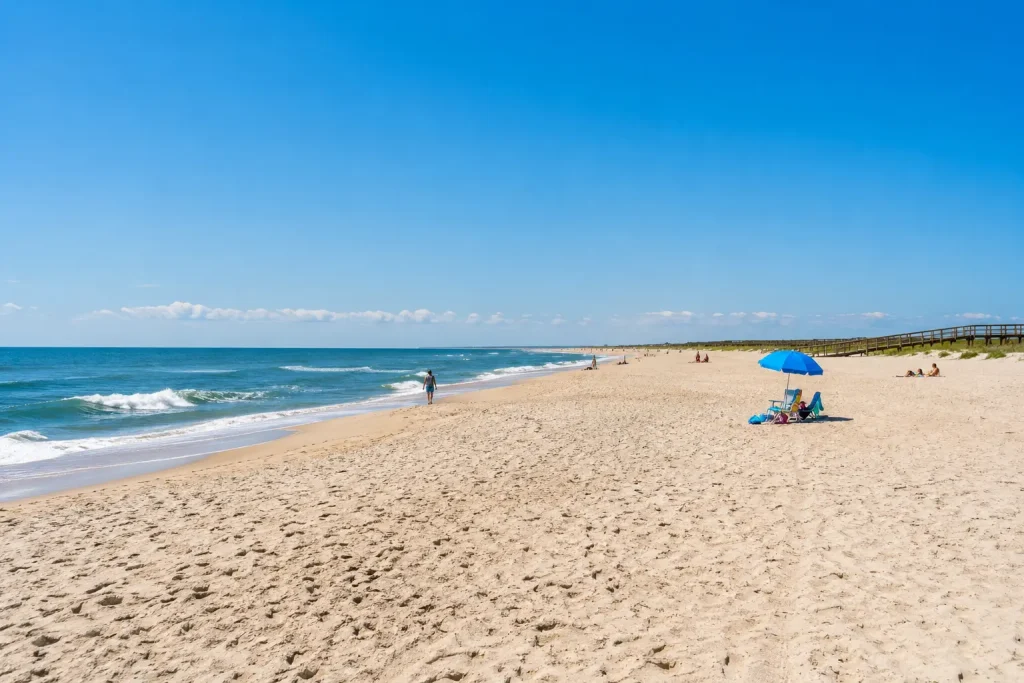
Jones Beach is one of the best-known examples because of its Atlantic Ocean shoreline.
Other parks offer freshwater swimming with forests and hills around the beach.
The important thing to remember is that swimming is often seasonal.
A park can be open while its beach or swimming area is closed.
Weather, water conditions, and lifeguard availability can also affect swimming on the day of your visit.
For more choices, see our guide to New York State Park beaches.
Most Scenic New York State Parks
Scenery means different things to different people.
For one visitor, the perfect view is a huge waterfall.
For another, it may be a quiet lake, a mountain overlook, an ocean sunset, or a forest filled with fall color.
Letchworth is a strong choice for gorge views.
Watkins Glen stands out for close-up rock and waterfall scenery.
Minnewaska is a good choice for cliffs, lakes, and broad landscapes.
Meanwhile, Long Island parks offer a completely different type of beauty along the water.
Fall can make many of these places even more impressive, but foliage does not peak everywhere at the same time.
If beautiful views are the main reason for your trip, our most scenic New York State Parks guide will help you choose based on the type of landscape you want to see.
New York State Parks Map: Choosing a Park by Region
Looking at a map before choosing a park can save a lot of driving.
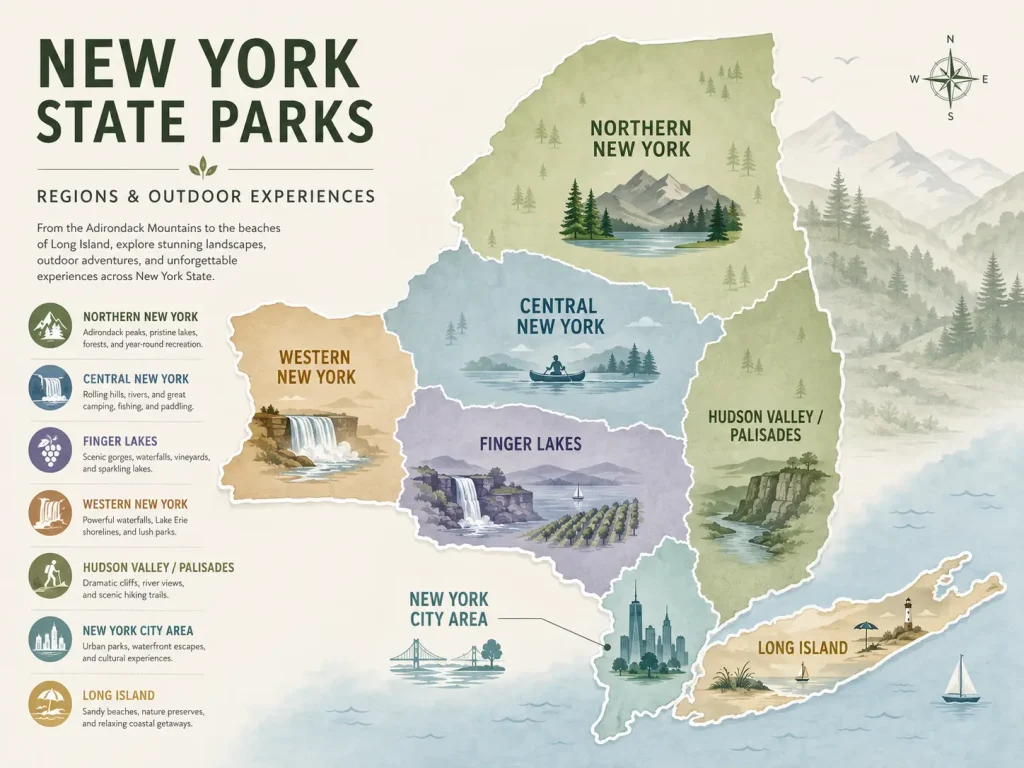
New York is large, and two parks that look close on a statewide list may still be hours apart.
New York City and Long Island
This area is useful for city travelers, beach trips, and shorter escapes.
Jones Beach is one of the best-known destinations.
Hudson Valley and Palisades
This part of the state works well for outdoor trips from New York City.
Bear Mountain and Harriman are common choices, while Minnewaska can work for a longer day trip.
Finger Lakes
The Finger Lakes region is especially good for waterfall trips.
Watkins Glen, Taughannock Falls, Buttermilk Falls, and Robert H. Treman give visitors several different gorge and waterfall experiences.
Western New York
Niagara Falls and Letchworth are two major reasons to explore Western New York.
One gives you a world-famous waterfall experience, while the other combines waterfalls with a long river gorge and hiking.
Central and Northern New York
These parts of the state offer more lakes, forests, trails, and outdoor recreation.
Just remember that some public lands in the Adirondacks and Catskills are managed by DEC rather than the State Parks system.
Use our New York State Parks map when you want to compare locations and build a trip around parks that make sense together.
What Is the Best Time to Visit New York State Parks?
There is no single best month for every park.
The right season depends on what you want to do.
Spring
Spring can be a great time for waterfalls and fresh green scenery.
However, some trails may be muddy, wet, or still closed after winter.
Gorge trails may also have later opening dates.
Summer
Summer is the easiest season for swimming, beaches, picnics, and many camping trips.
It is also one of the busiest times of year.
Popular parking lots can fill early on sunny weekends and holidays.
Fall
Fall brings cooler hiking weather and colorful forests.
It can be one of the most beautiful times to visit the Hudson Valley, Finger Lakes, and other wooded regions.
The downside is that popular foliage destinations can become very crowded.
Winter
Some parks remain enjoyable during winter for hiking, snowshoeing, cross-country skiing or quiet sightseeing.
However, roads, campgrounds, trails, and other facilities may operate on reduced schedules or close completely.
For a month-by-month planning guide, read our best time to visit New York State Parks article.
How to Plan Your First New York State Park Visit
A park trip does not need a complicated plan.
Still, checking a few things before you leave can save you from wasted driving or a disappointing day.
Check the Park Page That Morning
Hours and conditions can change.
Before leaving home, check parking information, weather notices, trail closures, and the activity you actually want to do.
If swimming is your main reason for going, check the swimming area.
If you want one famous hiking trail, check that trail rather than only checking whether the park itself is open.
Save a Map Before You Arrive
Do not depend completely on mobile service.
Save a park map to your phone while you still have a good connection.
It also helps to look at parking areas and trail locations before arriving.
Arrive Early at Popular Parks
A pass cannot help if the parking lot is full.
This matters most during summer weekends, holidays, and fall foliage season.
If a park is famous and the weather forecast looks perfect, getting there early is often one of the easiest ways to improve your day.
Pack for the Trip You Are Actually Taking
A short beach visit does not need the same equipment as a long forest hike.
However, useful basics include water, snacks, comfortable footwear, sun protection, bug protection, an extra layer of clothing, and a saved map.
Have a Backup Plan
Weather, trail closures, and full parking areas can change a trip.
Before driving several hours, identify one nearby backup park, trail, or attraction.
That way, one closure does not ruin the whole day.
New York State Park Rules Visitors Should Know
Park rules can change by location, activity, and season.
That is why broad statements like “dogs are allowed in every New York State Park” can be misleading.
Pets
Many parks allow pets in certain areas, often with leash rules.
However, individual beaches, trails, buildings, or recreation areas may not allow them.
Always check the specific park.
Swimming
Only swim in places where swimming is allowed.
A waterfall pool or quiet section of river may look safe but still be dangerous or closed to swimming.
Follow signs and lifeguard instructions.
Camping and Fires
Camp only in approved areas.
Fire rules can depend on the campground, season, and current conditions.
Do not assume you can build a fire anywhere just because you are outdoors.
Drones
Drone rules can be strict in state parks.
Always check whether permits or restrictions apply before bringing one.
Fishing and Hunting
Some parks allow fishing or hunting in approved areas, but licenses, seasons, and other rules can apply.
The activity being available somewhere inside a park does not mean it is allowed everywhere.
Wildlife and Trash
Do not feed wild animals or leave food behind.
Stay on marked trails where required, carry out your trash, and leave natural features where you found them.
Our complete New York State Parks rules guide will cover pets, swimming, camping, drones, and other common visitor questions in more detail.
How to Choose the Right New York State Park
When the number of choices starts to feel confusing, do not start by asking which park is most famous.
Start with what you want to do.
| If You Want… | Good Places to Start | Read Next |
| Waterfalls | Watkins Glen, Letchworth | Waterfall Hikes Guide |
| Hiking | Minnewaska, Harriman, Letchworth | Hiking Trails Guide |
| NYC day trip | Bear Mountain, Harriman | Best NY State Parks Near NYC |
| Family outing | Parks with easy walks and facilities | Family Parks Guide |
| Camping | Parks with campsites or cabins | Camping Guide |
| Beach day | Long Island and swimming parks | Beaches Guide |
| Scenic views | Letchworth, Minnewaska | Scenic Parks Guide |
| Low-cost trip | Free or reduced-fee options | Free Parks Guide |
Choosing by activity makes trip planning much easier.
It also reduces the chance that you drive a long way to a famous park that does not fit the kind of day you wanted.
Simple New York State Park Trip Ideas
You do not need a week-long vacation to enjoy the parks.
A Simple Day Trip
Arrive in the morning and see the park’s main attraction first.
After that, take a short walk or hike and find a place for lunch.
Leave some free time in the afternoon instead of filling every hour with activities.
A slower day is often more enjoyable than trying to see every corner of a large park.
A Waterfall Weekend
The Finger Lakes can work well for a waterfall-focused trip.
Choose one or two main parks rather than trying to race through every waterfall in the region.
Our best waterfall hikes in New York State Parks guide can help you decide which ones fit your walking ability.
A Family Weekend
Choose a park with activities your children will actually enjoy.
Short walks, water, playgrounds, and picnic areas may work better than a difficult hike.
Use our best New York State Parks for families guide for more ideas.
A Camping Weekend
Book your campsite first.
Then plan your hiking, swimming, or sightseeing around the campground instead of spending half the weekend driving.
Our New York State Parks camping guide will help with that part of the trip.
A Day Trip From NYC
Pick one main destination and leave early.
Trying to fit three far-away parks into one day usually creates more driving than exploring.
Use our best NY State Parks near NYC guide to compare realistic day-trip choices.
How to Save Money When Visiting NY State Parks
State park trips can already be affordable compared with many other family activities.
A little planning can lower the cost even more.
Compare Individual Fees With the Empire Pass
Think about how many times you expect to visit participating parks.
If you plan frequent trips, compare those vehicle fees with the cost of the New York Empire Pass.
Do not buy the pass only because it sounds convenient.
Buy it when the numbers make sense for your plans.
Check Your Library
Before buying your own Empire Pass, check your local library first. Some libraries may lend park passes to eligible cardholders. Our guide to borrowing a New York State Park pass from a library explains how to search for a pass, check availability, and understand common borrowing rules.
Look at Other Admission Programs
If you are a qualifying older New York resident, fourth-grade family, resident with a disability, veteran, or Gold Star family member, check whether one of the state’s official admission programs applies to you.
Bring Your Own Food and Water
A picnic can keep the cost of a family day much lower.
It also means you are not depending on a seasonal concession stand being open.
Understand Extra Fees
Vehicle entry may be only one part of the day’s cost.
Check camping, rentals, special attractions, and other paid activities before building your plan.
Our free New York State Parks guide will give budget travelers more ideas for lower-cost outdoor trips.
Frequently Asked Questions About New York State Parks
How many New York State Parks are there?
New York’s official State Parks website says the state has 180 state parks. They are spread across regions ranging from Long Island to Western and Northern New York.
What are the best New York State Parks?
Letchworth, Watkins Glen, Niagara Falls, Minnewaska, Bear Mountain, and Jones Beach are good starting points, but the right park depends on the activity you want.
Our best New York State Parks guide compares more options.
How much does it cost to enter New York State Parks?
Most parks that charge a normal day-use vehicle fee currently charge about $6 to $10 per vehicle.
However, park fees can vary, and activities such as camping or special attractions may cost extra.
Are New York State Parks free?
Some park visits can be free depending on the location, season, admission program, and how you arrive.
There are also official programs that provide free or reduced admission to certain eligible visitors.
What is the Empire Pass?
The Empire Pass covers day-use vehicle entry at most participating New York State Parks and DEC recreation facilities.
It does not make every activity inside the park free.
Is the Empire Pass worth it?
It can be worth the cost for people who visit participating parks many times during the year.
If you expect only one or two trips, paying individual vehicle fees may cost less.
Can I get a New York State Park pass from a library?
Some local libraries may lend park passes or offer similar outdoor-access programs.
Availability and borrowing rules depend on the library.
Our State Park Pass Library New York guide explains how to check.
Which New York State Parks are closest to NYC?
Bear Mountain and Harriman are common choices for outdoor day trips.
Jones Beach is a popular summer option, while Minnewaska can work for a longer full-day trip.
See our best NY State Parks near NYC guide for more choices.
Can you camp in New York State Parks?
Yes. Many parks offer campsites, and some also have cabins, cottages, or other overnight lodging.
Popular dates may require booking well ahead.
Our New York State Parks camping guide covers the process in more detail.
Which New York State Parks have waterfalls?
Letchworth, Watkins Glen, Taughannock Falls, Buttermilk Falls, and Robert H. Treman are well-known waterfall destinations.
Some falls are easy to see, while others involve more walking.
Which state parks have beaches?
Jones Beach is the best-known ocean example, but New York also has lake beaches and other designated swimming areas.
Swimming schedules are often seasonal.
Are New York State Parks open year-round?
Some parks remain open throughout the year, but individual trails, beaches, campgrounds, roads, and facilities may close seasonally.
Always check the specific park before traveling.
Are dogs allowed in New York State Parks?
Dogs are allowed in many park areas, but rules vary.
Some beaches, trails, buildings, and recreation areas may not permit pets.
Check the individual park and our New York State Parks rules guide before bringing your dog.
What is the best time to visit New York State Parks?
Summer works well for beaches, swimming, and many camping trips.
Fall is popular for hiking and foliage, spring can be good for waterfalls, and some parks offer winter activities.
Our best time to visit New York State Parks guide goes deeper into each season.
Where can I find a New York State Parks map?
You can search parks through the official State Parks website by region and location.
For trip planning, our New York State Parks map will make it easier to compare destinations and nearby stops.
Start Planning Your New York State Parks Trip
You do not need to visit the biggest or most famous park to have a good trip.
Start with the experience you want.
For waterfalls, look toward places such as Watkins Glen and Letchworth. For hiking and wide views, Minnewaska may fit better. For an ocean day, Long Island offers a completely different park experience.
Next, check the entrance fee, current conditions, and the activity you care about most.
Frequent visitors should compare normal vehicle fees with the Empire Pass. Budget travelers should also check library programs, free park options, and other official admission programs before paying full price.
Most importantly, leave enough time to enjoy the park.
One good trail, one waterfall, and a quiet picnic can make a better day than rushing between five attractions.
Use this New York State Parks Guide as your starting point, then move into the detailed guides for the park, activity, or region that matches your trip.

Silas Harlow
Silas Harlow is a travel writer and budget travel researcher at TravelBee Trips. He creates practical guides covering destinations, accommodation, transportation, attractions, safety, and affordable travel planning. His research uses official tourism resources, government websites, maps, and established service providers where available. Because travel information changes frequently, readers should verify important details before booking. View his complete author profile and editorial approach.